Cast Iron vs Carbon Steel — 2026 Pan Comparison for Home Cooks
Thermal mass, weight, seasoning chemistry, and searing performance compared between cast iron and carbon steel — the differences that actually affect daily cooking results.
Safety fact check included
CookNest Daily articles surface source counts, timing assumptions, kitchen-test notes, and food-safety caveats. This label means editorial safety review, not a substitute for local food-code or medical guidance.
The “cast iron vs carbon steel” question pits two of the oldest cooking surfaces against each other, both promising the same things — even heat, non-stick performance after seasoning, multi-decade lifespan. The marketing leans heavily on tradition: cast iron belongs in grandma’s kitchen, carbon steel in the French bistro. The truth is that both are reliable workhorses, both develop the same kind of polymerized non-stick surface, and the choice between them comes down to thermal mass, weight, and which cooking style dominates your kitchen.
This article compares them on the metrics that affect daily cooking: heat retention, responsiveness, weight, seasoning chemistry, and which pan suits which task. The conclusion is that most kitchens benefit from owning both — they handle different tasks well — but if forced to pick one, the answer depends on what you cook.
- The metallurgy difference between cast iron and carbon steel
- Thermal mass and how it affects searing performance
- Weight and ergonomic considerations
- Seasoning chemistry and maintenance routines
- Top picks across $30-150 budget range
The metallurgy — same family, different cousins
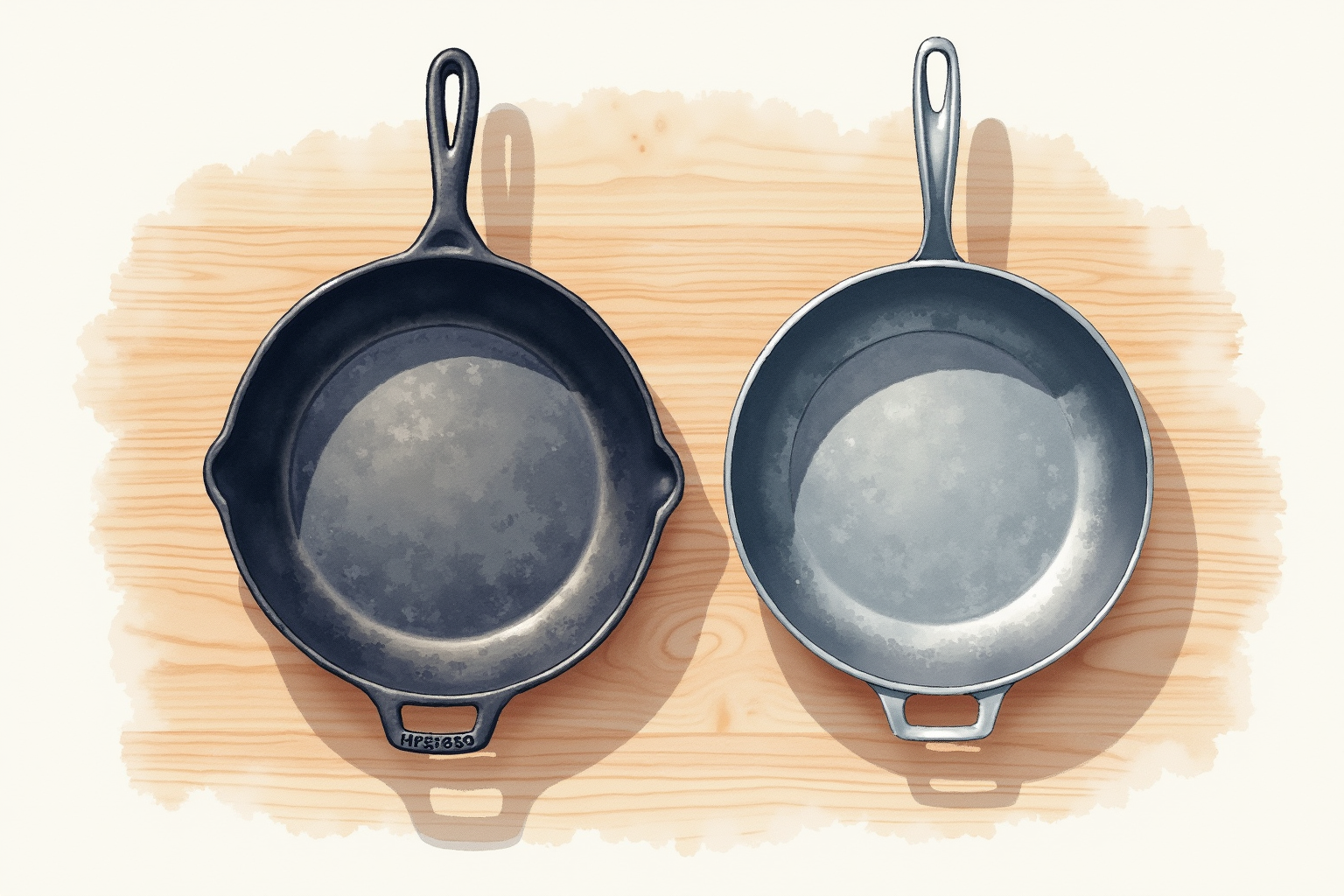
Cast iron and carbon steel are both iron-carbon alloys with no chromium. The defining difference is carbon content:
Cast iron contains 2-4% carbon. The high carbon makes the alloy brittle (it shatters when dropped) but allows it to be cast into thick-walled shapes. Cast iron pans are typically 4-6mm thick, which gives them the heavy weight and dense thermal mass that defines the category.
Carbon steel contains 0.05-2% carbon. The lower carbon allows the metal to be hammered, rolled, or spun into thinner sheets without shattering. Carbon steel pans are typically 1.5-2.5mm thick — half the thickness of cast iron, with about a third of the weight.
Neither metal contains chromium, which is why both rust without seasoning. Stainless steel pans contain 10-20% chromium for corrosion resistance but lose the seasoning advantage. Cast iron and carbon steel get their non-stick surface from polymerized oil; stainless steel relies on heat management and oil to prevent sticking.
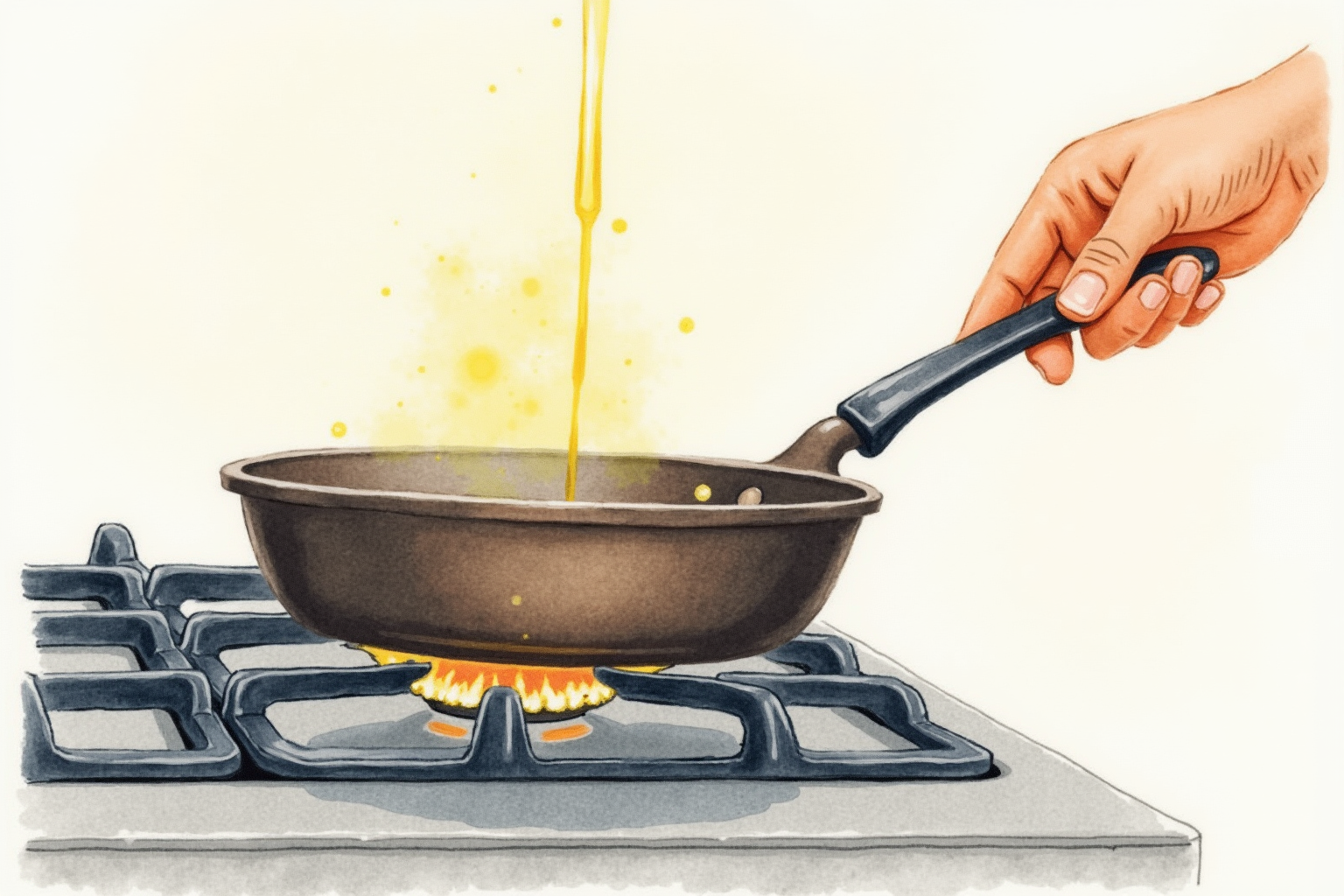
The seasoning process is identical for both — apply thin oil, heat above the oil’s smoke point, repeat until the surface darkens. Both develop the same polymerized hydrocarbon layer that creates the legendary cast iron non-stick surface.
Thermal mass and searing performance
The headline difference between the two pans is thermal mass — the energy stored in the pan at cooking temperature.
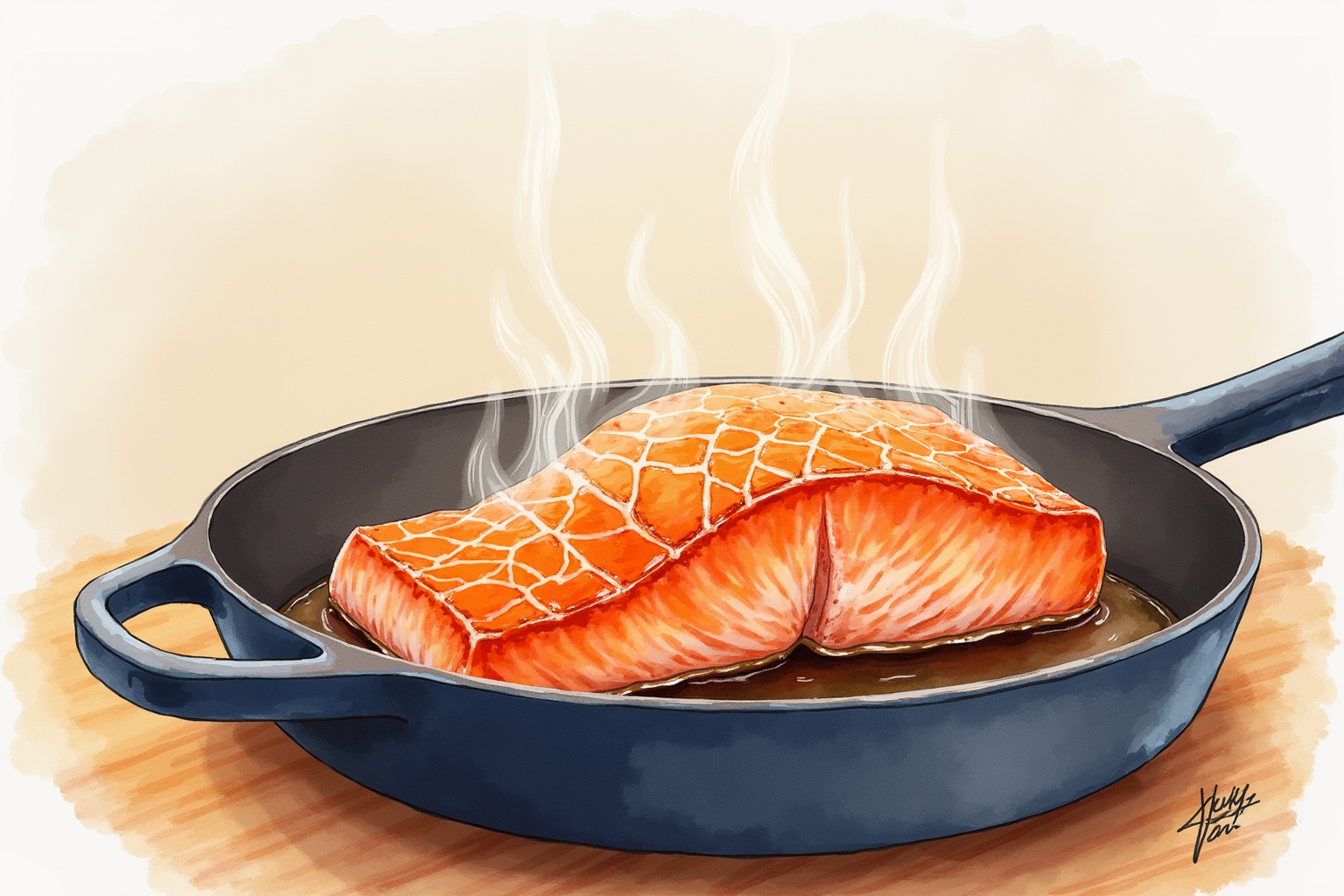
A 10-inch cast iron skillet weighs 5-7 lbs. At 400°F cooking temperature, it stores enough heat to maintain temperature even when cold food drops onto the surface. The cooking surface temperature drops by 15-25°F when a steak hits the pan, then recovers within seconds because the mass acts as a heat reservoir.
A 10-inch carbon steel pan weighs 2-3 lbs. At the same 400°F, it stores less than half the heat. When the same steak hits the surface, the temperature drops 30-50°F and takes longer to recover.
For searing applications — getting a thick cut of meat to develop a deep crust through the Maillard reaction — cast iron’s thermal mass is the structural advantage. Carbon steel works but produces a less aggressive sear, especially on thick cuts.
For sauté applications — quick, high-temperature cooking of small or thin ingredients — carbon steel’s responsiveness is the advantage. The lighter pan heats up faster and cools down faster, giving more precise temperature control over the second-to-second timing that sauté demands.
For oven use — bread baking, braising, pizza — cast iron’s thermal mass produces more even heat distribution and better crust development.
Weight and ergonomic reality
Pan weight matters for daily use more than buyers expect. A 5-lb cast iron skillet, swung from stove to plate with one hand, develops a noticeable wrist strain after a few months of daily use — especially for older cooks or those with prior wrist injuries.
Cast iron weights for 10-inch skillets:
- Lodge 10.25-inch: 5.5 lbs
- Field Company No. 8: 4.5 lbs (lighter, smoother machined surface)
- Stargazer 10.5-inch: 4.5 lbs
Carbon steel weights for 10-inch pans:
- Matfer Bourgeat 11-inch: 3.5 lbs
- Made In 10-inch: 2.5 lbs
- de Buyer Mineral B 10.25-inch: 3.2 lbs
The 2-pound difference between cast iron and carbon steel matters for high-frequency use. For users with wrist or grip strength concerns, carbon steel is the more sustainable choice. For users who use the pan once or twice a week and prefer the cooking advantages of cast iron, the weight is a manageable trade-off.
A useful rule: if you can comfortably hold a one-gallon water jug at arm’s length for 30 seconds, you can handle a 5-lb cast iron pan. If you can’t, carbon steel is the better fit.
Seasoning chemistry and maintenance
The seasoning process produces the polymerized oil layer that makes both pans non-stick. The chemistry:
- Apply a thin layer of high-smoke-point oil (avocado, grapeseed, flaxseed, or shortening). Thin means rubbed in and then wiped off with a paper towel until the pan looks dry.
- Heat to 450-500°F in an oven for 1 hour. The oil oxidizes and polymerizes — forming long hydrocarbon chains that bond to the iron surface.
- Repeat 3-5 times for initial seasoning.
After initial seasoning, daily cooking continues the process. Every time you cook with oil at high heat, a thin new layer adds to the polymerized coating. After 6 months of regular use, the pan develops the deep black surface that defines a well-seasoned pan.
Maintenance routine for both:
- After cooking, wash with mild soap and a soft sponge while the pan is still warm
- Dry immediately and thoroughly
- Apply a thin oil layer with a paper towel before storing
- Avoid: dishwasher, prolonged soaking, acidic foods cooked for long periods (tomato sauce, wine reductions)
Re-seasoning when needed:
- Light damage: cook bacon or another fatty food at moderate heat. The fat adds to the seasoning layer.
- Heavy damage (rust spots, sticky surface, peeling): scrub with steel wool, dry completely, re-season from scratch.
The maintenance routine becomes automatic after a few weeks. The fear of “ruining” the seasoning is overblown for modern users; the polymerized layer is durable, and even severe damage is recoverable with effort.
Top picks across budgets
Lodge 10.25-inch Cast Iron Skillet
Price · $25-40 — best budget cast iron pick
+ Pros
- · Pre-seasoned and ready to use out of the box
- · Decades of brand reliability and U.S. manufacturing
- · Handles searing, baking, and oven-to-stove transitions well
− Cons
- · Heavier than premium machined alternatives at 5.5 lbs
- · Rough sand-cast surface texture (not a flaw, but takes longer to develop ultra-smooth seasoning)
Paid affiliate link. Price, availability, and ratings can change; verify details on the retailer page before buying.
Matfer Bourgeat Black Steel 11-inch Frying Pan
Price · $60-90 — best carbon steel pick
+ Pros
- · Professional-grade French carbon steel used in Michelin kitchens
- · Lightweight at 3.5 lbs reduces wrist strain on daily use
- · Heats and cools faster than cast iron for responsive sauté
− Cons
- · Ships unseasoned — requires initial seasoning before use
- · Riveted handle has a slight ridge that traps food during cleaning
Paid affiliate link. Price, availability, and ratings can change; verify details on the retailer page before buying.
Field Company No. 8 Cast Iron Skillet
Price · $155-185 — best premium cast iron pick
+ Pros
- · Machined smooth interior surface develops seasoning faster
- · Lighter than Lodge at 4.5 lbs without losing thermal mass
- · U.S. manufacturing with lifetime warranty
− Cons
- · Premium price reflects machining and brand
- · Still heavier than carbon steel alternatives at comparable price
Paid affiliate link. Price, availability, and ratings can change; verify details on the retailer page before buying.
The buying decision
For most home cooks starting out, the Lodge 10.25-inch cast iron at $25-40 is the right first investment. The pre-seasoning makes it ready immediately, the thermal mass handles searing and baking well, and the price is low enough to forgive the inevitable beginner mistakes that damage seasoning.
For cooks who already have one cast iron and want a second pan for daily sauté work, the Matfer Bourgeat carbon steel at $60-90 is the right second pan. The lighter weight reduces wrist strain on weekday use; the responsiveness suits stir-fry, omelets, and quick sauté.
For cooks who prefer machined-smooth surfaces and lighter cast iron, the Field Company No. 8 at $155-185 is the premium upgrade. The faster seasoning development and lower weight justify the price for users who use cast iron daily and value the craft quality.
Avoid celebrity-brand cast iron and carbon steel under $100 — most are rebadged imports with inferior thermal performance. Lodge, Field, Stargazer (cast iron), and Matfer, de Buyer, Made In (carbon steel) cover the reliable brand range.
Pan selection is the most under-discussed cooking variable. The right pan for the technique — cast iron for thermal mass tasks, carbon steel for responsive sauté — produces noticeably better results than the wrong pan with the same skill level.