Digital Kitchen Scale — Why It Beats Measuring Cups (2026)
A digital scale eliminates the 20-30% volume variance that ruins baking. Here is the chemistry and the practical workflow for switching from cups to grams.
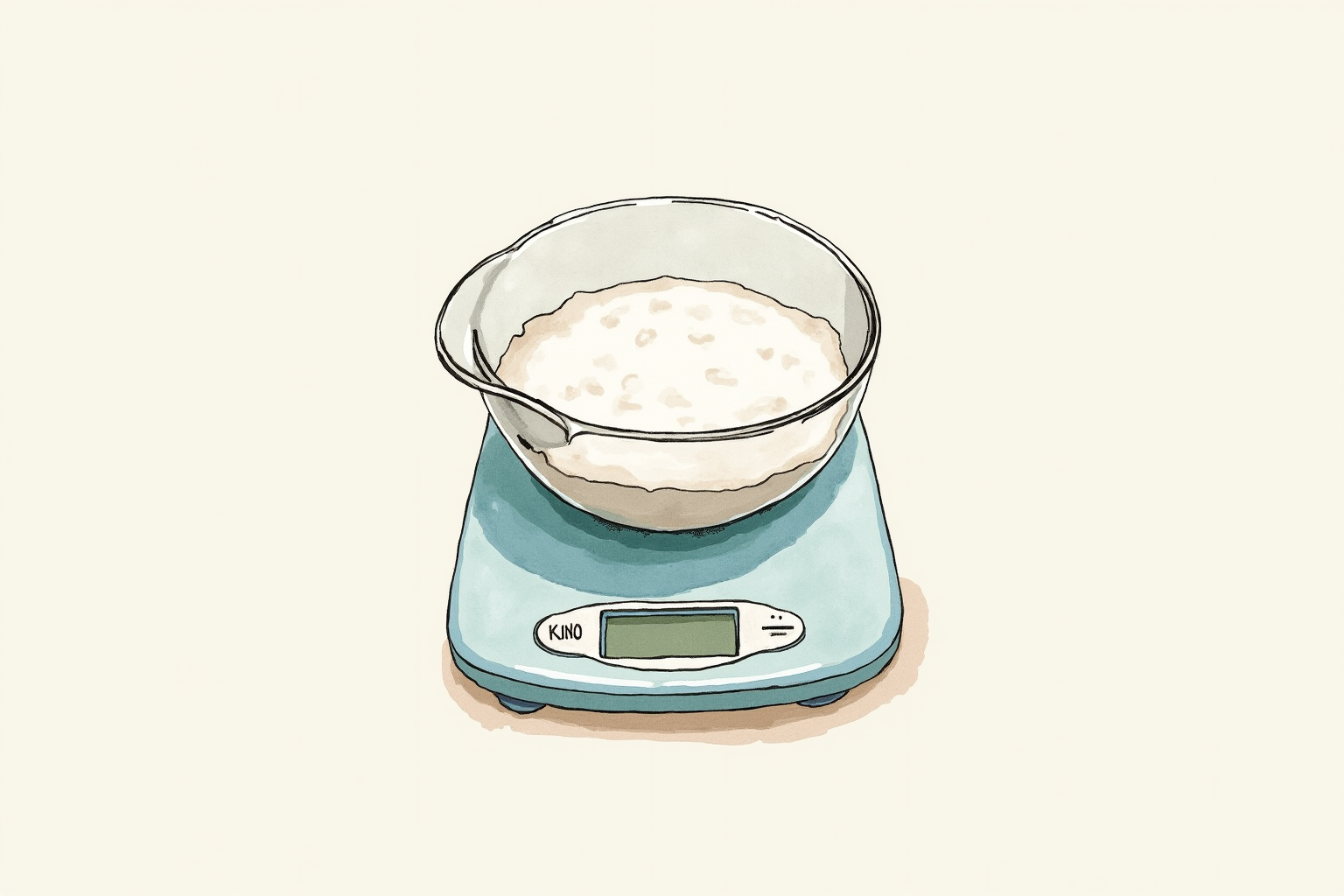
The digital kitchen scale is the highest-leverage $50 most home cooks can spend on equipment. The accuracy improvement is dramatic — a 30% volume measurement variance that ruins baking and produces inconsistent results across batches gets eliminated entirely. After the first few weeks of using a scale, most users wonder how they cooked seriously without one.
This article explains why volume measurements fail at scale, what features matter in a kitchen scale, and provides specific picks across the budget range. The conclusion is that any home cook who bakes regularly or who values consistency between cooking sessions should add a digital scale to the kitchen.
- Why flour volume varies 20-30% between scoopings
- Baker’s percentage and why bakers work in weight
- Features that distinguish good scales from bad ones
- Practical workflow for converting cup recipes to grams
- Top picks across $25-90 budget range
The volume measurement problem
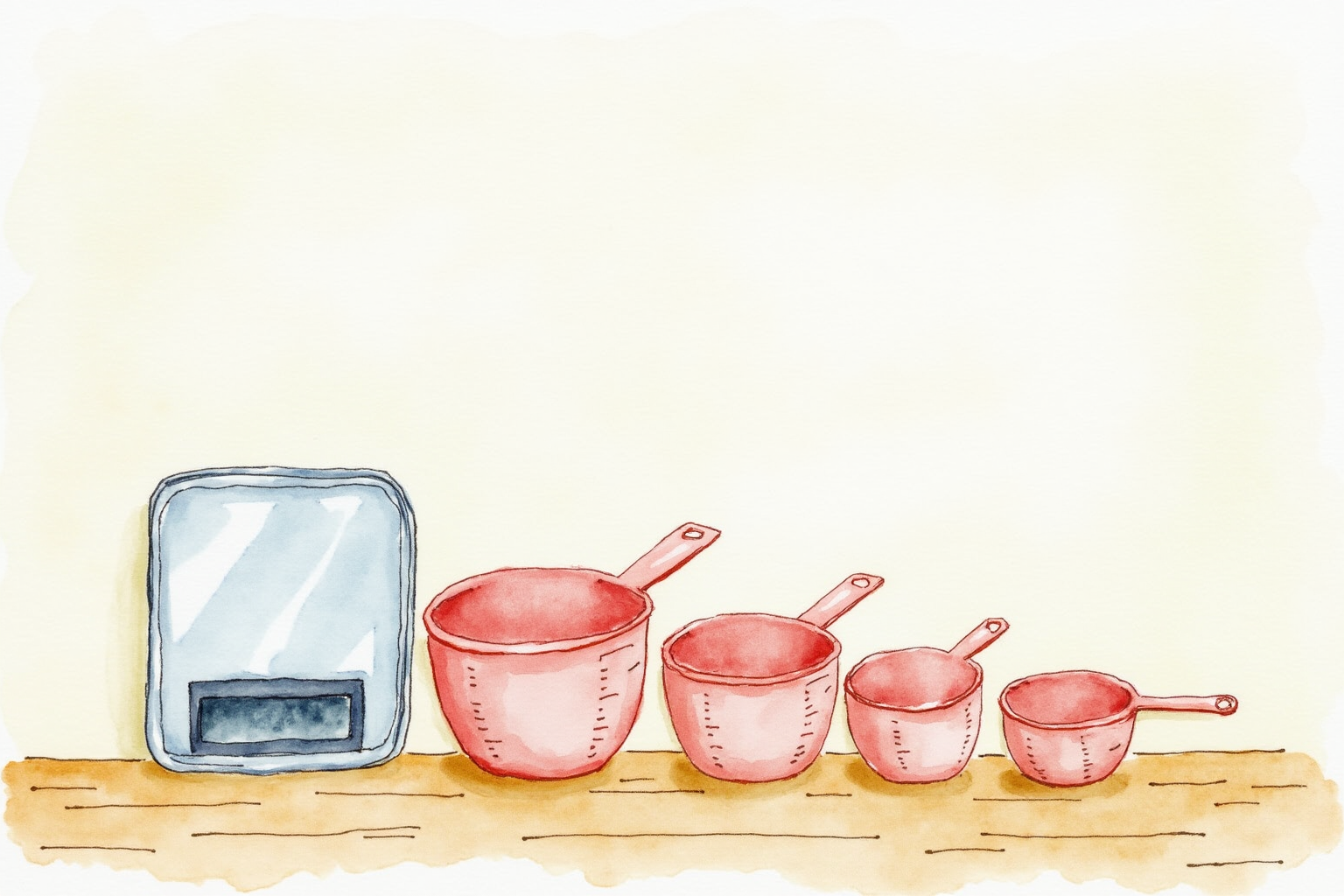
A “cup” of flour is not a precise unit. Depending on how the flour was scooped from the bag, the resulting weight varies dramatically:
Scoop directly from bag, packed: 165-180g per cup Scoop directly, level: 130-150g per cup Spoon into cup, level (King Arthur method): 115-125g per cup Sifted, spooned, level: 100-115g per cup
The range — 100g to 180g — represents an 80% variance for the “same” measurement. For pancakes or muffins, this variance is forgiving. For bread, croissants, or pasta dough, the same recipe produces dramatically different results from week to week depending on how the flour was scooped.
Sugar has less variance (about 5-10% between methods) but cocoa, brown sugar, and powdered ingredients all behave like flour. Liquid measurements are tighter (about 5% variance) but still imperfect with most measuring cups.
The scale eliminates these variances. 100 grams of flour is always 100 grams regardless of how it got into the bowl.
Baker’s percentage — why bakers work in weight
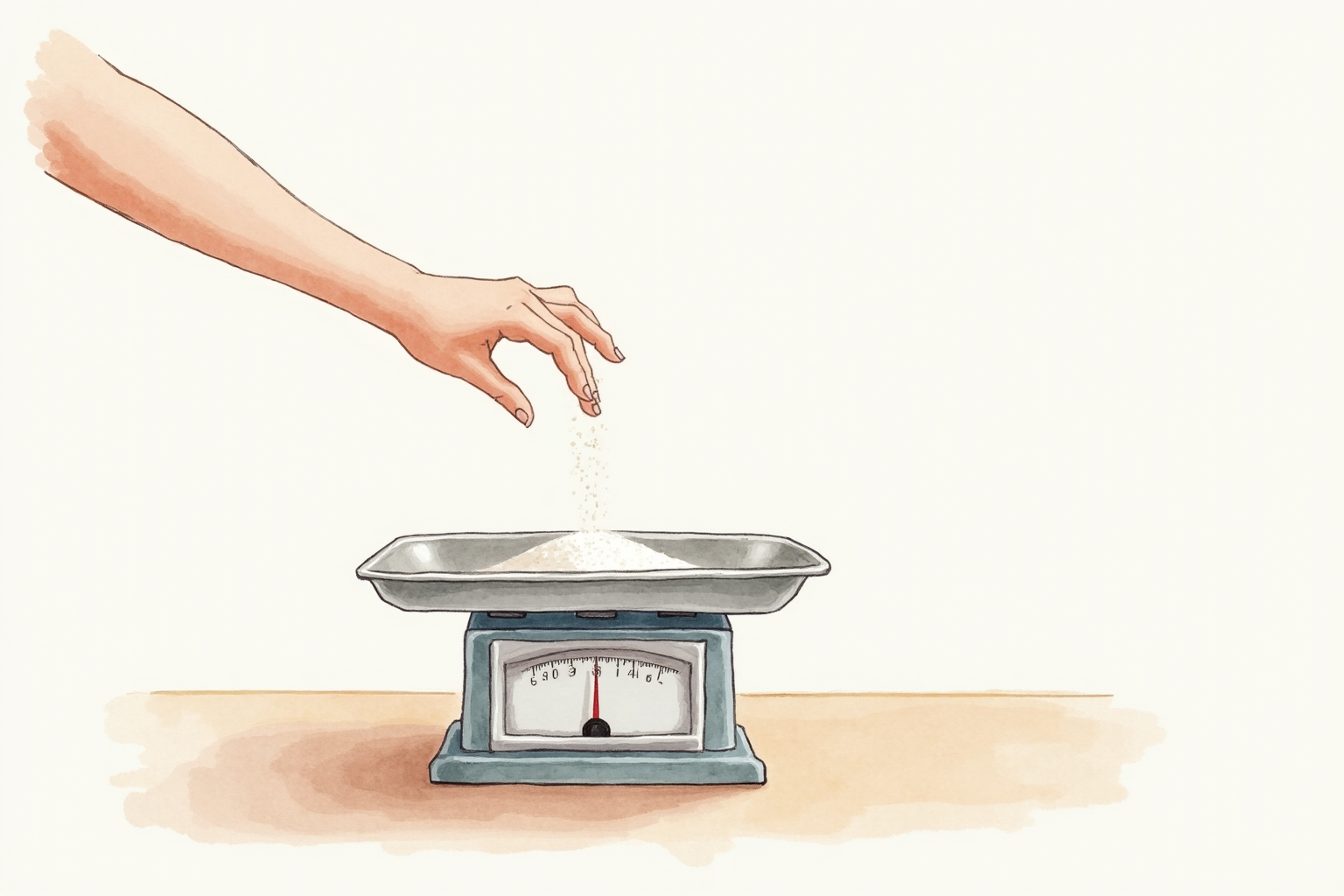
Professional bakers express recipes in “baker’s percentage” — the weight of each ingredient as a percentage of the flour weight. A typical bread recipe:
- Flour: 100% (the reference)
- Water: 75%
- Salt: 2%
- Yeast: 1%
This format makes scaling trivial. For a 500g flour batch, water = 375g, salt = 10g, yeast = 5g. For a 1000g flour batch, double everything.
The system relies on consistent flour weight, which requires a scale. Cup-based recipes can’t use this scaling approach because the cup-to-gram conversion varies too much.
For home bakers, baker’s percentage opens up flexibility. Once you understand that hydration (water-to-flour ratio) controls bread texture, you can dial it up or down by 1-2% for different effects. Same with salt percentage for seasoning. The scale enables this precision; volume measurement doesn’t.
Features that matter
Three specifications determine whether a scale works for daily kitchen use:
Accuracy to 1 gram: The default for quality scales. Avoid scales that read in 5g or 10g increments — they can’t measure salt, yeast, or small additions accurately. Some recipes specify quantities like “8g salt” where the difference between 5g and 10g matters.
Capacity of 5kg+ (11 lbs): Lower-capacity scales can’t weigh larger items like stock pots, watermelons, or full bread doughs. The 5-7 kg range handles essentially any home cooking task.
Tare function: Zero out the weight of the bowl before adding ingredients. Add flour, tare to zero, add water on top, etc. This makes one-bowl mixing dramatically faster. Most scales include this; verify before purchase.
Nice-to-haves:
- Backlit display (visible in dim kitchen lighting)
- Auto-shutoff longer than 60 seconds (some shut off mid-pour)
- Pull-out display or stylus for use with deep bowls
- Removable platter (cleanable in dishwasher)
- Unit conversion (g, oz, lb, ml)
Practical workflow
Switching from cups to grams takes a week to feel natural and produces noticeable improvements immediately.
Workflow:
- Place the empty bowl on the scale.
- Press tare to zero.
- Add the first ingredient until the display shows the target weight.
- Press tare again to zero (the scale now shows zero with all the current contents).
- Add the next ingredient on top to the next target weight.
- Repeat for each ingredient.
This “one-bowl, multi-tare” technique mixes recipes faster than using separate measuring cups. No washing measuring cups, no spills between cups and bowls, no fussing with leveling.
For recipes still in cup format, convert each cup to grams the first time using a conversion table:
Common conversions:
- All-purpose flour: 1 cup = 120g
- Bread flour: 1 cup = 130g
- Sugar (granulated): 1 cup = 200g
- Sugar (brown, packed): 1 cup = 220g
- Butter: 1 cup = 227g (2 sticks)
- Milk: 1 cup = 240g
- Water: 1 cup = 240g
- Honey: 1 cup = 340g
Write the gram weights beside the recipe for next time.
Top picks across budgets
OXO Good Grips Stainless Steel Food Scale (11 lb)
Price · $45-55 — best premium pick
+ Pros
- · Pull-out display for use with tall containers
- · 1g accuracy with 11 lb (5 kg) capacity
- · Backlit display visible in dim kitchen lighting
− Cons
- · Larger footprint than minimalist scales
- · Requires AA batteries (no rechargeable option)
Escali Primo Digital Scale (11 lb)
Price · $25-35 — best budget pick
+ Pros
- · 1g accuracy at one-third the OXO price
- · Compact footprint fits in drawers easily
- · Reliable Escali brand with 5-year warranty
− Cons
- · No pull-out display — tall containers obscure readout
- · Plastic platter (vs OXO's stainless)
GreaterGoods Digital Food Scale (22 lb)
Price · $25-35 — best high-capacity pick
+ Pros
- · 22 lb (10 kg) capacity handles larger items
- · 1g accuracy throughout the range
- · Backlit LCD display
− Cons
- · Plastic build quality below premium picks
- · Auto-shutoff at 90 seconds — sometimes too aggressive
The buying decision
For home cooks who bake weekly or value consistency between cooking sessions, the OXO Good Grips at $45-55 is the right premium pick. The pull-out display matters more than buyers expect — it eliminates the frustration of trying to read the scale through the bottom of a tall mixing bowl.
For budget-conscious or occasional users, the Escali Primo at $25-35 delivers the same accuracy as the OXO at less than half the price. The compact size suits small kitchens; the warranty backs up the brand reputation.
For users who weigh large items (full stock pots, whole turkeys for brining), the GreaterGoods 22-lb scale at $25-35 is the right pick. The double-capacity rarely matters but when it does, the cheaper alternatives can’t substitute.
Avoid scales below $20 — they typically have 5g or 10g resolution which is too imprecise for baking, or unreliable load cells that drift over months. The $25 floor is where 1g resolution and reliable build quality start.
The scale is one of the highest-leverage upgrades for any kitchen. The accuracy improvement compounds across every measured ingredient, the workflow simplification compounds across years of daily use, and the scale itself is cheap enough that there’s no reason to wait. Buy one this week.