Dutch Oven No-Knead Bread — The Method That Works in 2026
Lahey-style no-knead bread baked in a Dutch oven, with hydration ratios, timing windows, and the crust mechanics that produce a bakery-quality loaf at home.
Safety fact check included
CookNest Daily articles surface source counts, timing assumptions, kitchen-test notes, and food-safety caveats. This label means editorial safety review, not a substitute for local food-code or medical guidance.
The Lahey no-knead method changed home bread baking when Mark Bittman covered it in the New York Times in 2006. The technique combines three insights — long room-temperature fermentation, minimal handling, and Dutch-oven baking — to produce bread that rivals professional bakeries with almost no skill required. The method has since spawned thousands of variations, but the core technique remains the same in 2026 as it was in 2006: mix, wait, bake, eat.
This article explains why each step of the Lahey method works, the small variables that determine bread quality, and the equipment investments that matter for consistent results. The conclusion is that excellent home bread requires a Dutch oven and patience — and very little else.
- The Lahey no-knead method step by step
- Why Dutch ovens produce bakery-quality crust at home
- Hydration ratios and how they affect crumb structure
- Timing windows for room-temperature fermentation
- Top Dutch oven picks across $40-400 budget range
The Lahey method — what it actually does
Jim Lahey’s no-knead bread recipe is deceptively simple:
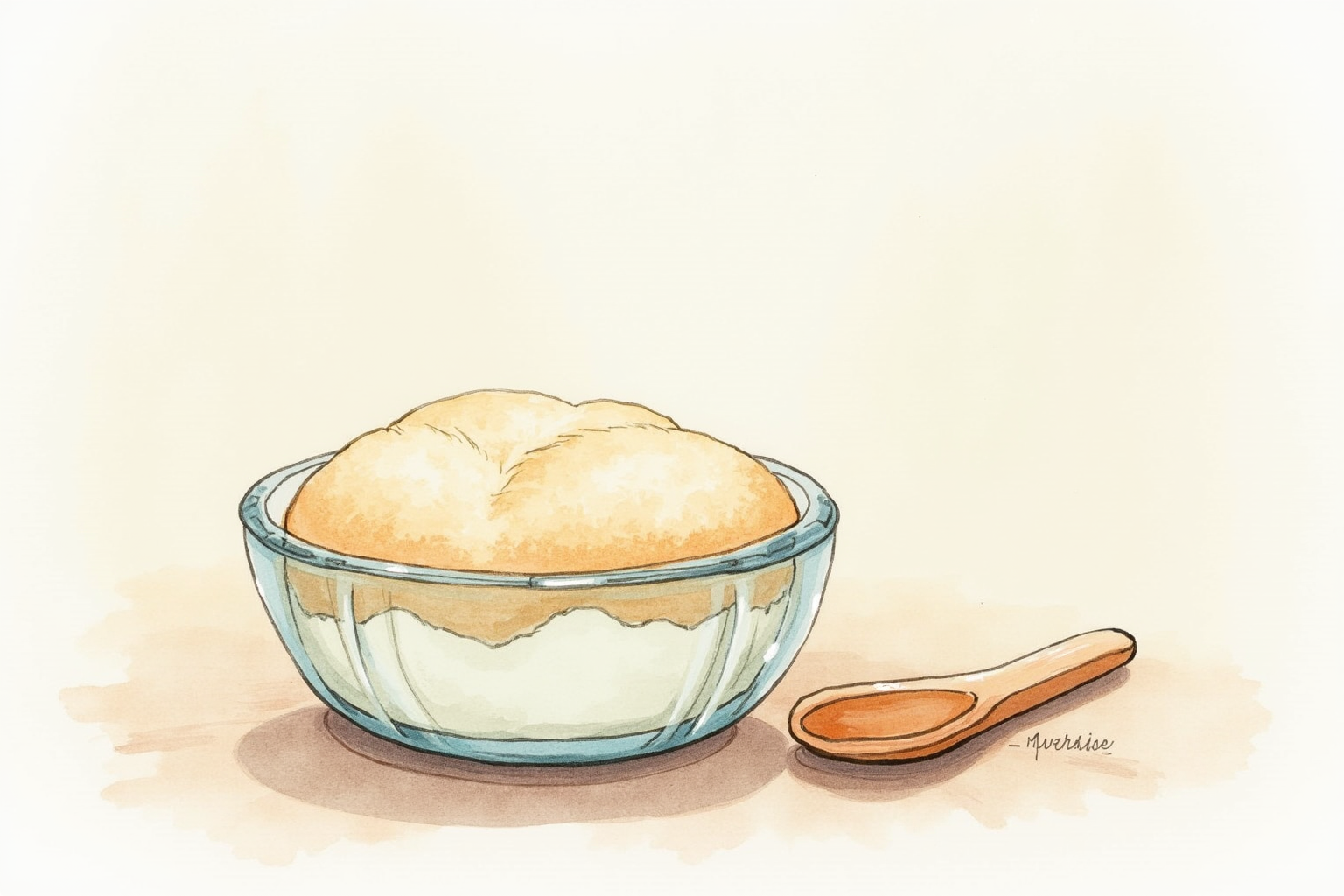
Mix: 400g bread flour, 8g salt, 1g instant yeast, 300g water. Stir together with a wooden spoon until no dry flour remains. The dough is wet and shaggy — that’s correct.
Bulk ferment: Cover with plastic wrap. Let sit at room temperature 12-18 hours. The long time at low yeast level develops gluten strands through natural enzymatic activity, eliminating the need for kneading.
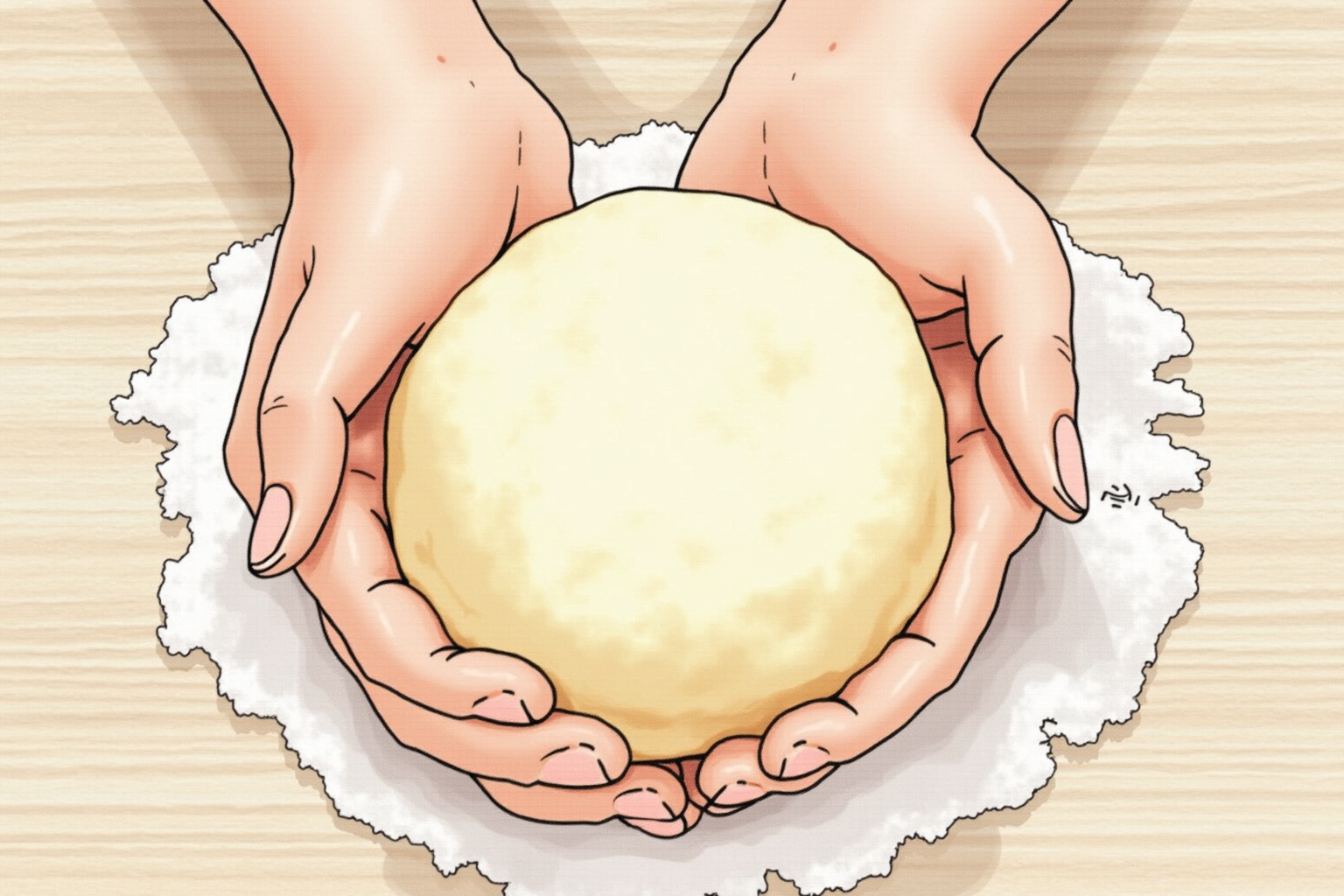
Shape: Turn the dough onto a heavily floured surface. Fold it onto itself twice to form a rough ball. Cover and rest 15 minutes. Reshape into a tight boule on a piece of parchment paper.
Second proof: Cover with a towel and rest 1-2 hours. The dough should rise slightly and feel soft and airy.
Preheat: 30 minutes before baking, place a 5-7 quart Dutch oven (with lid) in a 500°F oven.
Bake: Carefully lower the dough into the preheated Dutch oven (using the parchment paper as a sling). Cover with the lid. Bake 30 minutes covered, then remove the lid and bake another 15-20 minutes until deep golden.
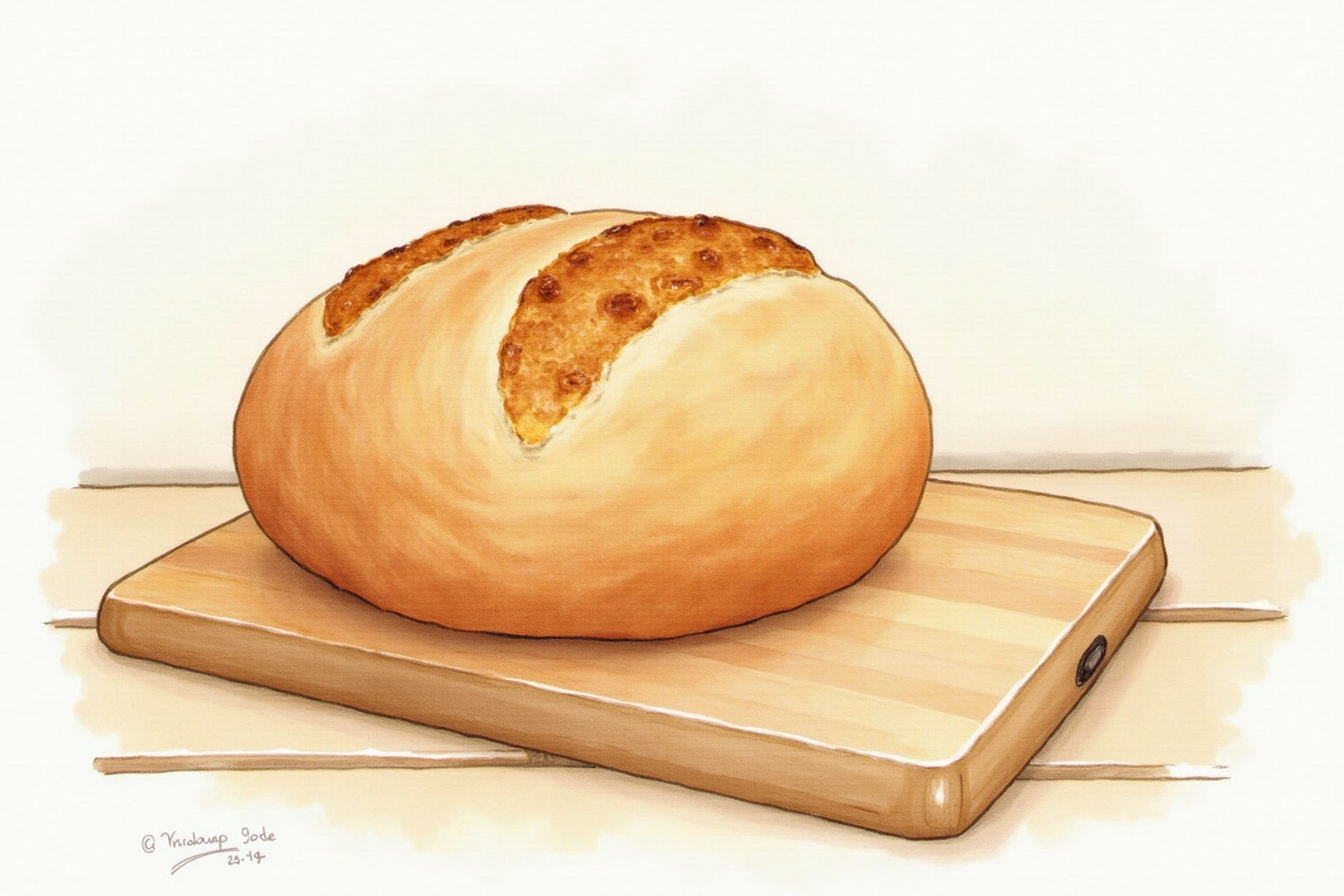
Cool: Transfer to a wire rack. Resist cutting for 30 minutes — the crumb continues setting as the loaf cools.
The mechanics: the long ferment develops gluten through enzymatic action rather than mechanical kneading. The preheated Dutch oven provides high radiant heat from all directions, mimicking a baker’s deck oven. The trapped steam keeps the crust pliable during initial oven spring, then the uncovered phase produces the deep golden crust through dry heat.
Why Dutch ovens produce bakery-quality results
The Dutch oven is the critical equipment that makes home bread match bakery quality. Three properties matter:
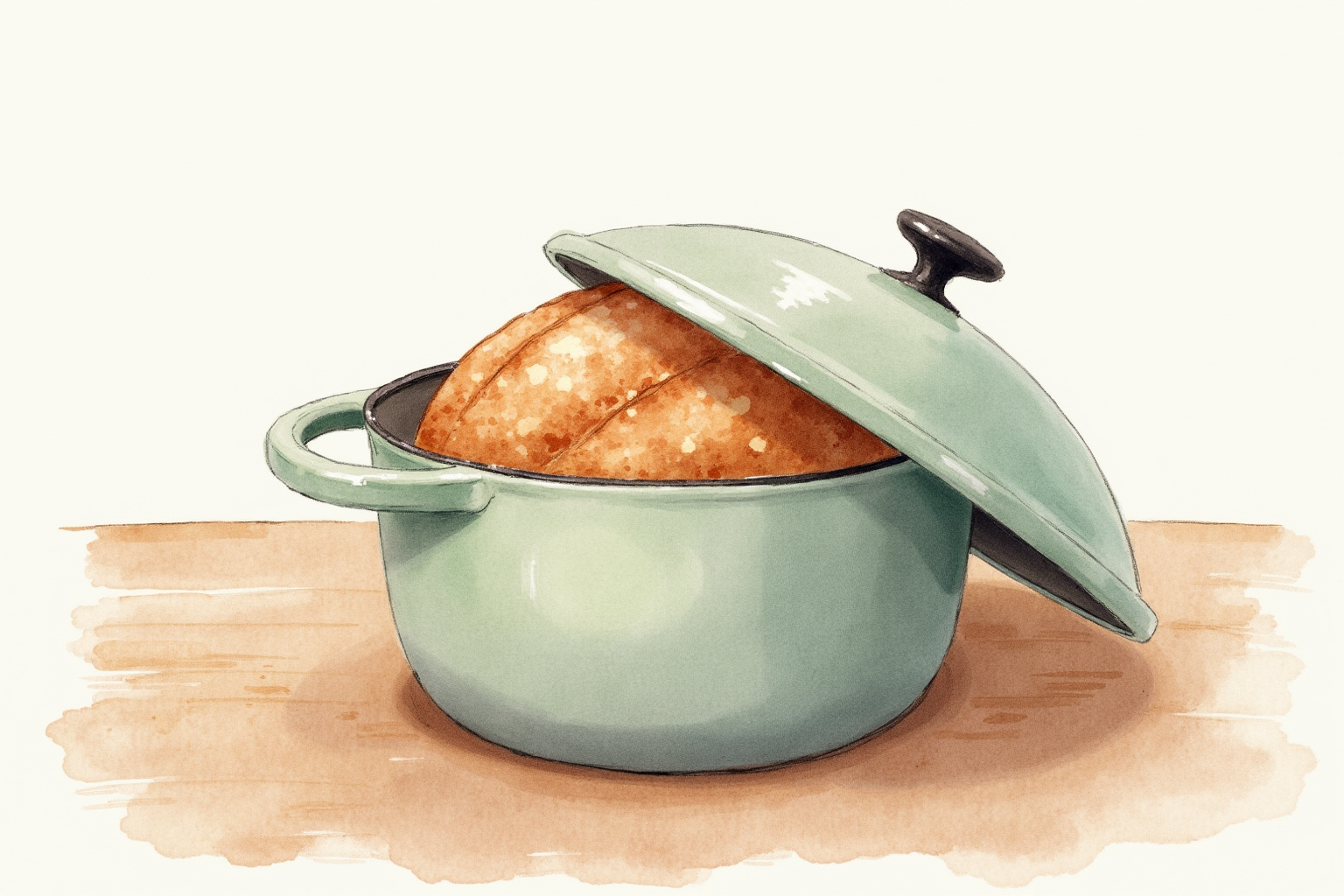
Trapped steam. When dough goes into the hot oven, it releases moisture rapidly. In an open oven, the moisture escapes and the crust forms early, preventing oven spring (the rapid expansion that creates open crumb). In a closed Dutch oven, the moisture is trapped inside the lid, keeping the crust pliable for 20-30 minutes while the loaf expands.
Radiant heat from all sides. The thick cast iron walls heat to oven temperature during the 30-minute preheat. The dough is then surrounded by ~500°F radiant heat from above, below, and the sides — closer to a baker’s deck oven than the convection currents of a typical home oven.
Even baking surface. The hot Dutch oven bottom transfers heat to the dough through conduction, producing the bottom crust that defines artisan bread. A cold baking sheet starts at room temperature and never reaches the temperature that develops a proper bottom crust.
Together, these three properties replicate the conditions of a professional bread oven. The Lahey method works because the Dutch oven provides them simultaneously — no other home oven setup does.
Alternatives like baking on a pizza stone with a steam pan in the oven produce similar but slightly inferior results. The Dutch oven is the simplest path to bakery-quality bread at home.
Hydration ratios and crumb structure
Hydration — the ratio of water to flour by weight — determines the texture of the finished crumb.
60-65% hydration: Dense, tight crumb. Used for sandwich breads, pull-apart rolls, and pizza dough. The lower water content produces a tighter gluten network and a softer, less open crumb.
70-75% hydration (Lahey standard): Open, irregular crumb with moderately large holes. The classic artisan look. The dough is wet enough to develop strong gluten through long ferment, dry enough to handle without specialty techniques.
75-80% hydration: Very open crumb with large holes. Used for country loaves and rustic bread. Requires more careful shaping to maintain structure.
80%+ hydration (Tartine territory): Extremely open crumb with dramatic holes. Requires advanced shaping techniques (stretch-and-fold series, slap-and-fold) and a confident hand. Beginner attempts produce shapeless, sticky messes.
For most home bakers starting out, 75% hydration is the right target. It produces visibly artisan bread without requiring expert handling.
Measure flour and water by weight, not volume. A kitchen scale costs $15-25 and eliminates the largest source of inconsistency in home baking. A cup of flour can vary 100-150g depending on how it was scooped; this 50% variance throws off hydration completely.
Timing windows for room-temperature fermentation
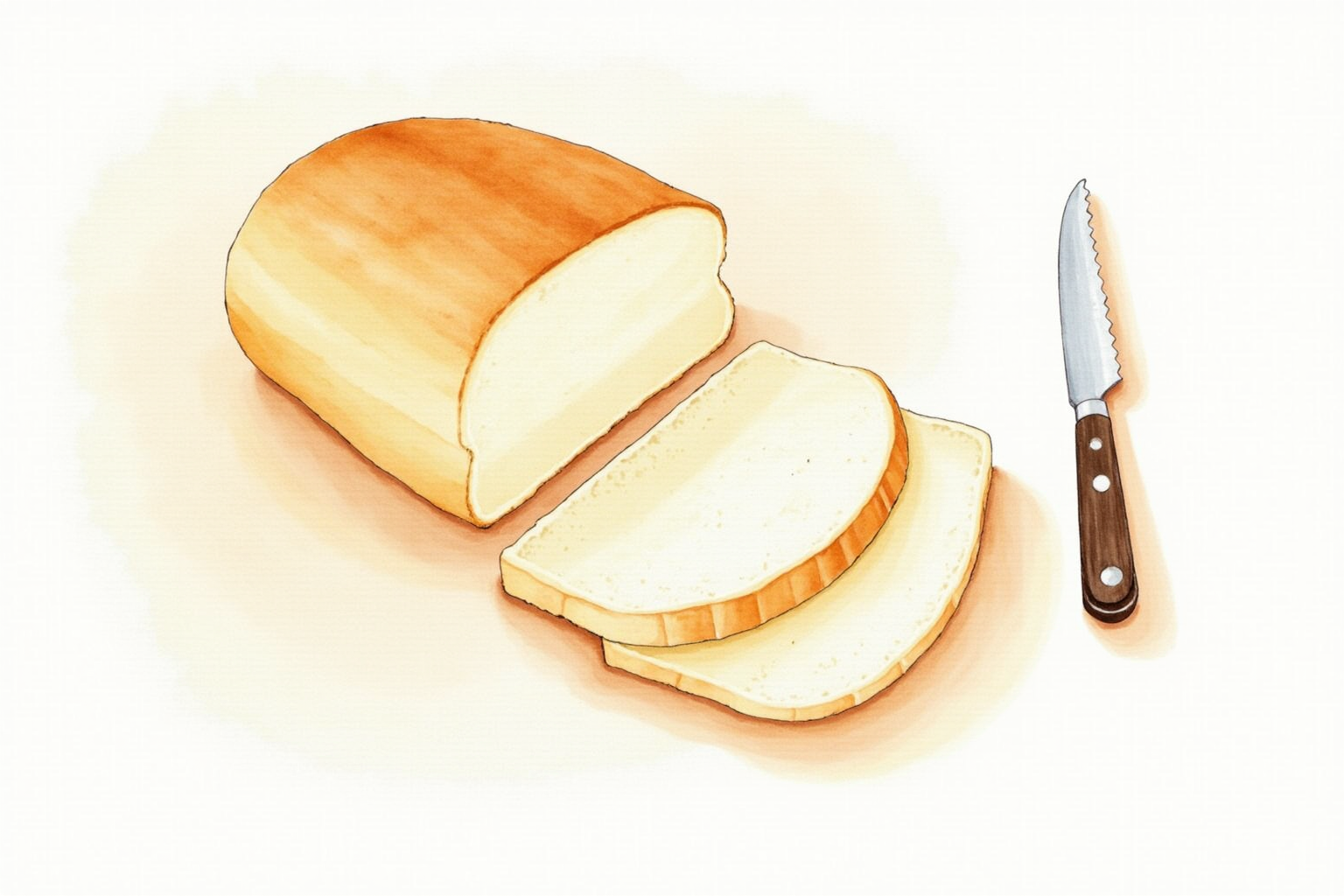
The 12-18 hour Lahey bulk ferment has a window — not a single point. The right time within the window depends on your kitchen temperature:
Warm kitchen (75-78°F / 24-26°C): 12-14 hours. The dough develops faster in heat. Check at 12 hours; if it has doubled and shows surface bubbles, it’s ready.
Standard kitchen (68-72°F / 20-22°C): 14-16 hours. The most common range. Mix in the evening, bake the next afternoon.
Cool kitchen (60-65°F / 15-18°C): 16-18 hours. Slow ferment develops more flavor but requires longer waiting.
Underferment signals: dough is dense, not bubbly, doesn’t spring back when poked. Add 1-2 hours and check again.
Overferment signals: dough has collapsed inward, surface is gummy, smell is strongly alcoholic. The bread will still bake but will have less rise and flatter flavor. Continue to baking anyway — overfermented bread is better than no bread.
The room-temperature ferment is the magic of the no-knead method. The long enzymatic action develops gluten without kneading and develops complex flavors that quick yeasted breads cannot match.
Top Dutch oven picks across budgets
Lodge 6-Quart Pre-Seasoned Cast Iron Dutch Oven
Price · $60-90 — best budget pick
+ Pros
- · Heavy 7-mm cast iron walls provide excellent thermal mass
- · Pre-seasoned and ready to use out of the box
- · Steel knob handles oven temperatures up to 500°F
− Cons
- · Rough sand-cast interior surface
- · Heavy at 14+ lbs — challenging for users with grip strength concerns
Paid affiliate link. Price, availability, and ratings can change; verify details on the retailer page before buying.
Le Creuset 5.5-Quart Round French Oven
Price · $320-420 — best premium pick
+ Pros
- · Cast iron with vibrant enamel coating — easy to clean and visually distinctive
- · Lifetime warranty and exceptional resale value
- · Smaller knob recently updated for 500°F oven safety
− Cons
- · Premium price reflects brand prestige more than functional advantages
- · Phenolic resin knob on older models must be replaced for 500°F use
Paid affiliate link. Price, availability, and ratings can change; verify details on the retailer page before buying.
Staub 5.75-Quart Round Cocotte
Price · $280-380 — best mid-premium pick
+ Pros
- · Black matte interior enamel develops natural seasoning over time
- · Self-basting spikes inside the lid promote moisture circulation
- · Phenolic-free knob handles 500°F directly
− Cons
- · Premium price comparable to Le Creuset
- · Heavier than Le Creuset comparable size
Paid affiliate link. Price, availability, and ratings can change; verify details on the retailer page before buying.
The buying decision
For most home bakers starting out, the Lodge 6-quart cast iron at $60-90 is the right entry point. The pre-seasoning, sturdy build, and 500°F-safe steel knob handle everything the Lahey method requires. The aesthetic is utilitarian, but bread baked in a Lodge is identical to bread baked in a Le Creuset.
For bakers who want a multi-purpose pot that also handles braising, soup, and stew — and who appreciate the visual presence of enameled cast iron — the Le Creuset 5.5-quart at $320-420 is the long-term investment. The lifetime warranty and brand resale value justify the premium for users who use the pot multiple times per week.
For premium-quality alternatives at a slight discount, the Staub 5.75-quart at $280-380 produces results identical to Le Creuset with the bonus of self-basting lid spikes. Many professional kitchens prefer Staub over Le Creuset for serious cooking.
Avoid Dutch ovens with phenolic resin knobs at the high oven temperatures required by Lahey-style baking (500°F preheat). Verify the knob is rated for 500°F+ before purchase, or budget $15-25 for a steel knob replacement available for most major brands.
The Lahey no-knead method democratized artisan bread. Twenty minutes of active work over two days produces a loaf that would have required years of training to make a generation ago. The Dutch oven is the enabling equipment; everything else is patience.