Nonstick Pan Lifespan — When to Replace (2026 Research)
PTFE and ceramic nonstick pan lifespan, replacement signals, and the safety questions that actually matter — based on current FDA and EPA research, not internet panic.
Safety fact check included
CookNest Daily articles surface source counts, timing assumptions, kitchen-test notes, and food-safety caveats. This label means editorial safety review, not a substitute for local food-code or medical guidance.
The nonstick pan is the most-replaced piece of cookware in most home kitchens, and the conversation around it is often more confusing than helpful. Internet panic about Teflon and PFOA persists despite the manufacturing changes that eliminated the original concern over a decade ago. Meanwhile, real questions — when to replace, how to extend lifespan, what to look for — get less attention than they deserve.
This article cuts through the noise with current FDA, EPA, and American Cancer Society guidance, then provides practical advice for getting the most out of nonstick pans you actually own. The conclusion is calmer than the internet suggests: PTFE is safe at normal cooking temperatures, ceramic is also safe but degrades faster, and replacement is the inevitable end-of-life event for any nonstick cookware.
- What FDA, EPA, and ACS actually say about Teflon safety
- PTFE vs ceramic — chemistry, performance, and lifespan differences
- The replacement signals that matter (and the ones that don’t)
- Maintenance habits that double pan lifespan
- Top picks across $30-180 budget range
What the regulators actually say
The PTFE (polytetrafluoroethylene, brand-named Teflon) controversy is essentially settled in mainstream regulatory science:
FDA position: PTFE is approved for food contact use. Intact PTFE cookware at normal cooking temperatures presents no known health risk.
EPA position: PFOA (perfluorooctanoic acid), the manufacturing chemical that drove the original concern, was phased out of cookware manufacturing globally between 2013 and 2015. Modern PTFE pans are PFOA-free.
American Cancer Society position: Current epidemiological data does not show increased cancer risk from PTFE cookware use. The historical concerns about PFOA exposure applied primarily to manufacturing workers, not cookware users.
Remaining caution: Do not overheat empty PTFE pans above 500°F (260°C). Above that temperature, the coating decomposes and releases fumes that can sicken pet birds and cause flu-like symptoms in humans (polymer fume fever). Normal cooking — even high-heat searing — keeps the pan below this threshold because the food itself absorbs heat.
The replacement chemistry (GenX, ADONA, and other “C6” perfluorinated compounds) introduced in 2015 has less environmental persistence than legacy PFOA but is still being studied. The CDC has marked these as concerns for environmental health (water contamination near manufacturing sites) but not for cookware use.
For most home cooks, the practical takeaway is: modern PTFE pans are safe. The internet panic about Teflon mostly references pre-2015 concerns that no longer apply to current production.
PTFE vs ceramic — performance and lifespan
The two dominant nonstick chemistries are PTFE and ceramic (specifically thermolon, derived from silicon dioxide). Both produce excellent food release; the difference is durability.
PTFE coatings (used by All-Clad HA1, T-fal, Tramontina, Anolon) provide nonstick performance for 3-5 years of regular home use. The coating tolerates moderate heat exposure and gradual wear. The molecular structure is durable enough to survive thousands of cooking cycles before performance noticeably degrades.
Ceramic coatings (used by GreenPan, Caraway, Our Place) provide initially excellent nonstick performance for 1-2 years. The ceramic-silicate structure is more brittle than PTFE polymer chains — heat cycles and minor abrasion cause faster degradation. After 18 months of regular use, ceramic pans typically begin needing more oil to prevent sticking; by 24 months, eggs reliably stick.
The performance trade-off is meaningful. For households that cook eggs daily, the PTFE lifespan advantage is real. For households focused on PFAS-free cooking, the ceramic shorter lifespan is acceptable.
A third category — hard-anodized aluminum with PTFE coating (All-Clad HA1, Cuisinart Multiclad) — combines the durability of harder base metal with PTFE non-stick. These typically last 5-7 years of regular home use, the longest in the nonstick category.
Replacement signals that matter
A pan needs replacing when any of these conditions appear:
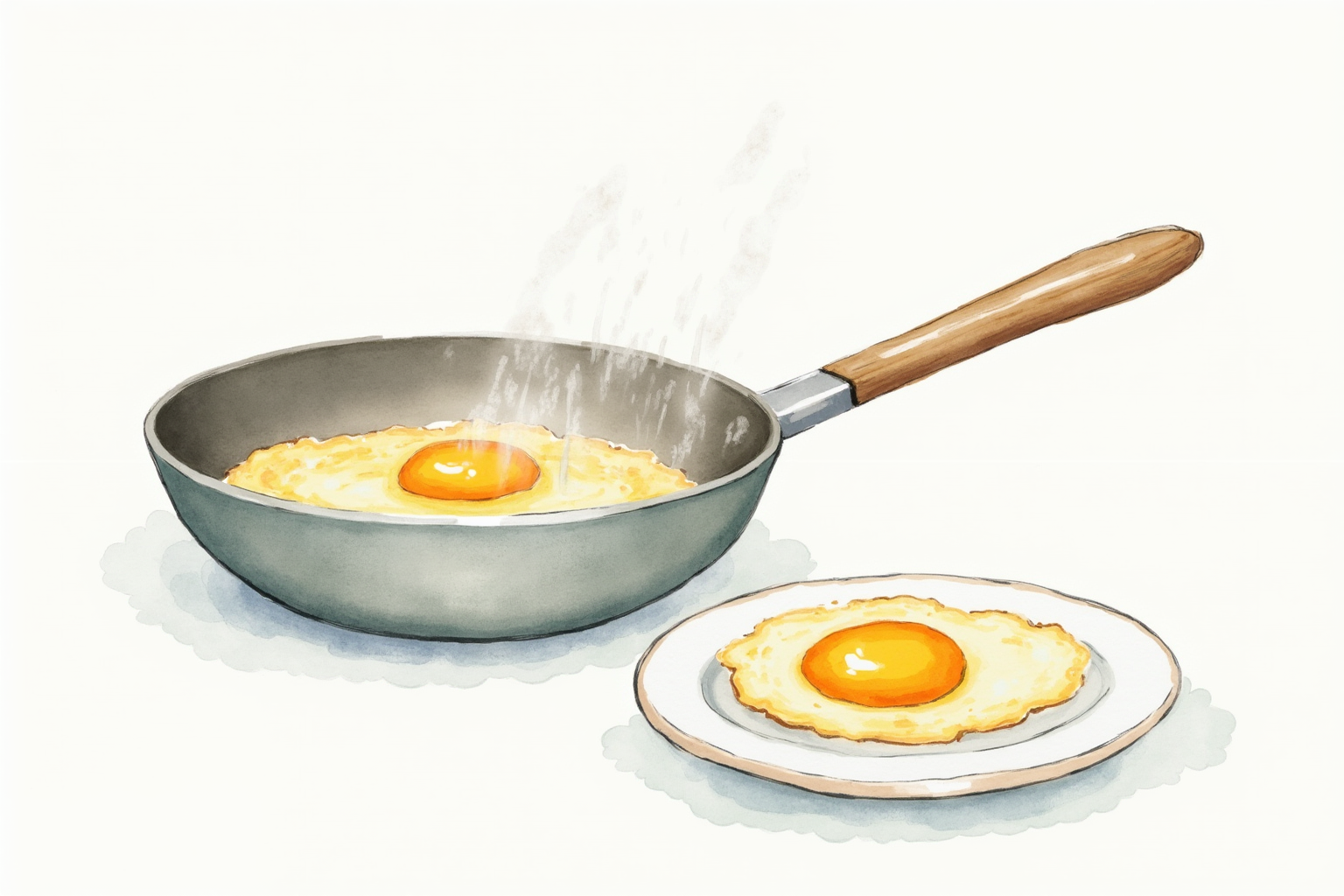
Coating release failure: Food no longer slides cleanly even with oil. Eggs stick despite generous butter. This is the clearest end-of-life signal.
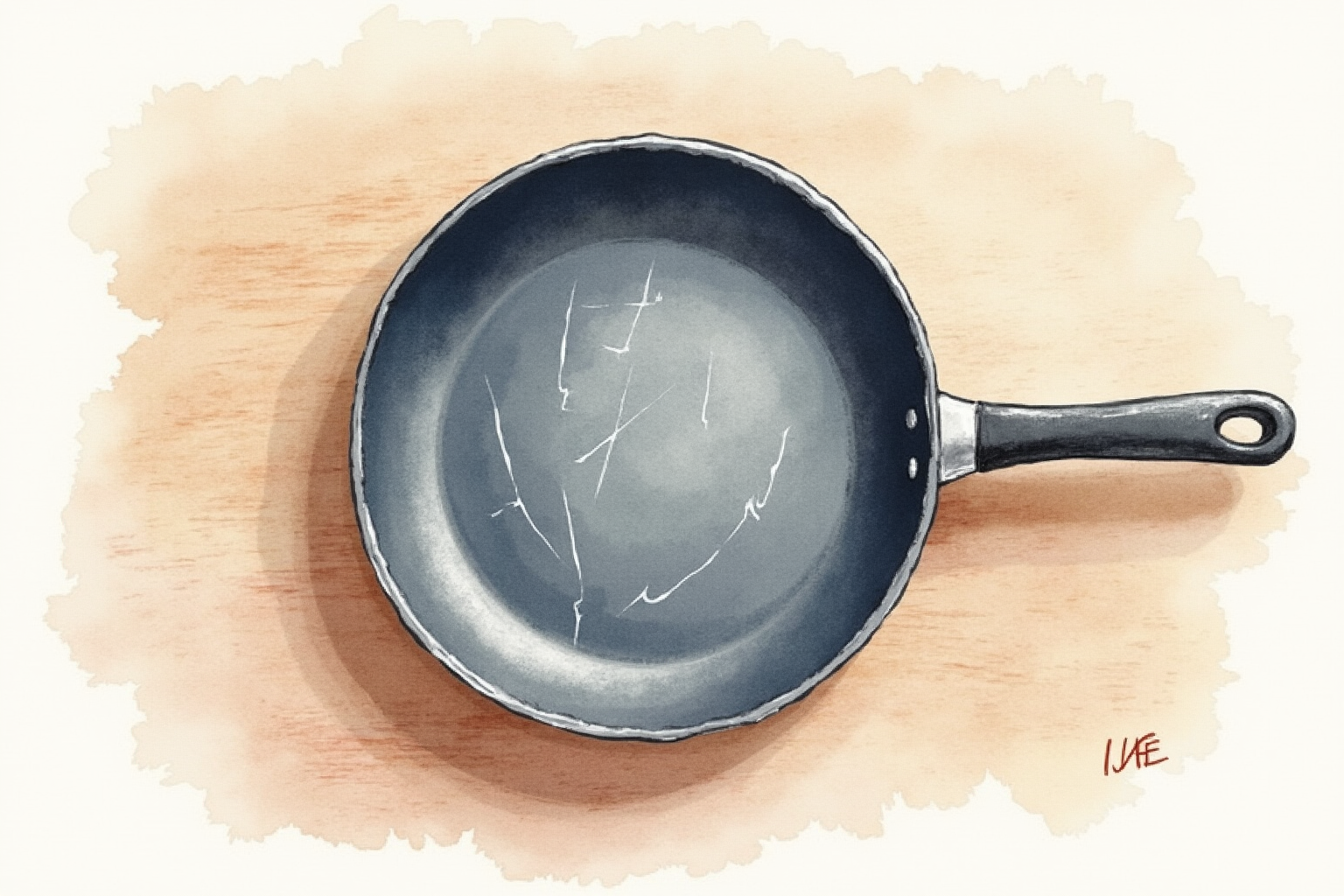
Visible scratches exposing metal: When the underlying aluminum or stainless layer is visible through the coating, the protective layer is compromised. This typically appears in lines from metal utensils.
Coating peeling or flaking: Any visible separation of the coating from the base metal means the pan is failing. Replace immediately; flakes can end up in food.
Discoloration that won’t wash off: Mineral deposits and residue can bond to nonstick coating over years. If repeated washing doesn’t remove the discoloration, the surface is compromised.
Warping: If the pan no longer sits flat on the stove, it heats unevenly and the coating degrades faster in the hot spots. Replace.
Signals that don’t matter as much: minor surface staining (cosmetic only), slight dulling of the original shine (normal aging), small surface marks from heat scrubbing (cosmetic).
For ceramic pans, the lifespan signal is performance degradation — eggs progressively stick more even with oil. For PTFE pans, the lifespan signal is visible damage. Both pan types eventually need replacement; ceramic typically lasts 1-2 years, PTFE 3-5 years, hard-anodized PTFE 5-7 years.
Maintenance habits that extend lifespan
A few habits double the practical lifespan of any nonstick pan:
Use silicone, wood, or nylon utensils only. Even pans marketed as “metal utensil safe” develop scratches faster with metal use. Silicone tools cost $10-20 and add years to pan life.
Wash by hand, not dishwasher. Dishwasher heat and harsh detergent accelerate coating degradation. Wash with mild dish soap and a soft sponge. Avoid scouring pads.
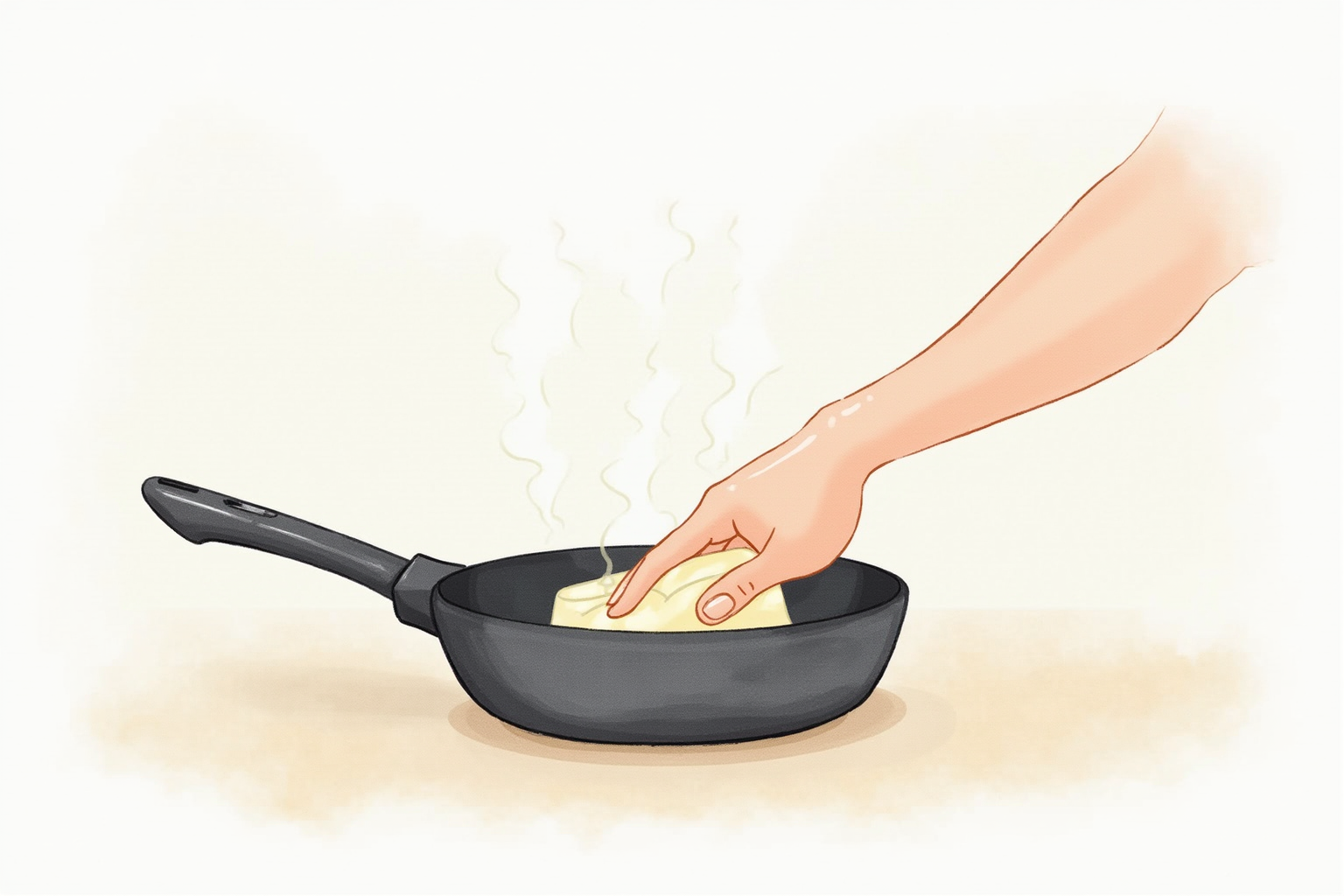
Never use aerosol cooking spray. The lecithin emulsifier in aerosol sprays bakes onto nonstick coatings at cooking temperatures, creating a sticky polymer layer that doesn’t wash off. Use butter or oil from a bottle instead.
Avoid high heat. Nonstick performs best at low-to-medium heat. The legendary nonstick performance is at 300-400°F; above 450°F, the coating life shortens rapidly. For searing, use cast iron or stainless steel instead.
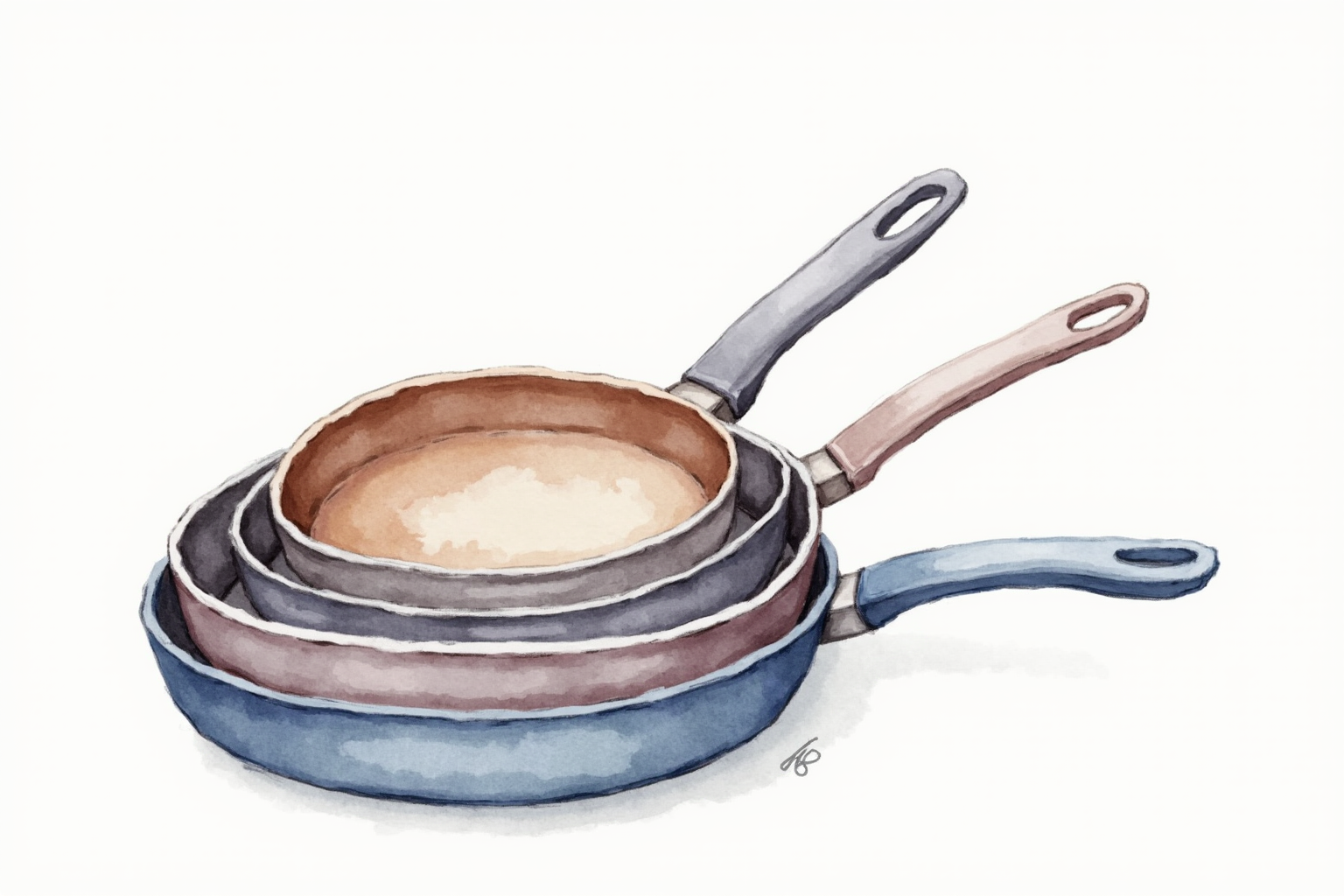
Stack with care. If you stack nonstick pans in a cabinet, place a soft cloth or paper towel between them to prevent the bottom of one pan from scratching the cooking surface of another.
These habits extend pan lifespan from the marketed 2-3 years to the realistic 5-7 years that many home cooks achieve with proper care.
Top picks across budgets
T-fal Ultimate Hard Anodized Nonstick 12-inch
Price · $35-55 — best budget pick
+ Pros
- · Hard-anodized aluminum base resists warping
- · PTFE coating provides reliable 3-4 year lifespan with care
- · Heat-sensing red dot indicator confirms proper preheating
− Cons
- · Riveted handle traps food during cleaning
- · Lid sold separately on most models
Paid affiliate link. Price, availability, and ratings can change; verify details on the retailer page before buying.
All-Clad HA1 Hard Anodized Nonstick 12-inch
Price · $120-160 — best premium PTFE pick
+ Pros
- · Heaviest-gauge hard-anodized aluminum in the category
- · 5-7 year practical lifespan with proper care
- · Made in U.S. with lifetime warranty against defects
− Cons
- · Premium price vs budget alternatives
- · Heavier at 3+ lbs than basic nonstick pans
Paid affiliate link. Price, availability, and ratings can change; verify details on the retailer page before buying.
GreenPan Valencia Pro Ceramic Nonstick 12-inch
Price · $80-130 — best PFAS-free ceramic pick
+ Pros
- · Thermolon ceramic coating is PFAS-free and chemically inert
- · Magneto induction base works on all cooktops
- · Excellent initial nonstick performance for eggs and fish
− Cons
- · Ceramic coating degrades faster — typically 18-24 month useful life
- · Higher purchase cost per year of use vs PTFE alternatives
Paid affiliate link. Price, availability, and ratings can change; verify details on the retailer page before buying.
The buying decision
For most households without specific concerns about PFAS, the All-Clad HA1 12-inch at $120-160 is the right premium pick. The 5-7 year practical lifespan justifies the upfront price; the hard-anodized base resists warping and the PTFE coating provides reliable performance across the entire lifespan. The total cost-per-year often beats cheaper pans that need replacement every 2 years.
For budget-conscious households or as a secondary nonstick, the T-fal Ultimate Hard Anodized at $35-55 delivers 3-4 years of reliable performance at one-third the premium pick price. The cost-per-year is comparable to All-Clad, but the build quality (handle, lid, gauge) is below the premium tier.
For households prioritizing PFAS-free cooking, the GreenPan Valencia Pro at $80-130 is the right choice within the ceramic category. Accept that the practical lifespan is shorter than PTFE alternatives, and plan to replace approximately every 2 years.
Avoid nonstick pans under $25 from no-name brands. The coating chemistry is often inadequately documented, the gauge is too thin for warp resistance, and the practical lifespan is under 18 months. The false economy plays out within a year.
The nonstick pan is a consumable, not a forever tool. Plan for replacement and the choice becomes about cost-per-year of useful service. Premium hard-anodized PTFE wins the lifespan competition for most kitchens; ceramic wins for PFAS-sensitive households at the cost of more frequent replacement.