Takeout and Delivery Leftovers: How to Run the Two-Hour Food Safety Clock
A practical takeout safety system for adding delivery, table, travel, cooling, storage, and reheating time without pretending the clock resets.
Safety fact check included
CookNest Daily articles surface source counts, timing assumptions, kitchen-test notes, and food-safety caveats. This label means editorial safety review, not a substitute for local food-code or medical guidance.
The takeout bag on the counter looks like dinner, not a stopwatch. Yet once a perishable meal is no longer reliably held cold at 40°F (4°C) or below or hot at 140°F (60°C) or above, time matters. The common mistake is starting a fresh two-hour clock when the courier arrives, again after dinner, and again when the container reaches the refrigerator. Those are not three separate allowances.
A safer approach is to run one cumulative clock across the parts you can observe: delivery delay, unpacking, table time, the ride to another location, and portioning. USDA advises refrigerating perishable leftovers within two hours, or within one hour when the food is exposed to temperatures above 90°F (32°C) (USDA leftovers guidance). If part of the history is unknown, arithmetic cannot certify the food; uncertainty is itself a reason to choose the conservative path.
The clock you are actually managing
The clock applies to perishable food in uncontrolled temperatures, not to every minute since you placed the order. Food held continuously at 40°F or below, or maintained at 140°F or above with a real heat source, is controlled. A closed paper bag, insulated tote without enough cold source, warm car, turned-off oven, or countertop is not proof of control.
USDA calls 40°F to 140°F the “Danger Zone” because bacteria can grow rapidly there. It also warns that some bacteria can produce heat-resistant toxins, so later cooking or reheating does not necessarily repair earlier mishandling (USDA temperature guidance). That is why “I will microwave it extra hot” is not a valid rescue plan.
A practical cumulative-time formula
Use minutes throughout:
Known uncontrolled minutes = delivery minutes + unpacking minutes + serving minutes + travel minutes + portioning minutes
Then calculate:
Remaining ordinary-temperature budget = 120 minutes − known uncontrolled minutes
If the food was exposed to air above 90°F, use the stricter one-hour boundary:
Remaining hot-weather budget = 60 minutes − known uncontrolled minutes
This is a planning aid, not a microbial test. It assumes the food started under safe temperature control and that the periods you count are accurate. It cannot repair an unknown restaurant holding period, an untracked doorstep delay, a broken seal, or food that arrived only lukewarm when it should have been hot.
| Example segment | Minutes | Running total |
|---|---|---|
| Courier trip after pickup | 32 | 32 |
| Bag sits while everyone gathers | 18 | 50 |
| Meal is served and eaten | 42 | 92 |
| Leftovers are portioned | 12 | 104 |
| Ordinary-temperature margin | 120 − 104 | 16 minutes |
A 16-minute margin is not permission to add another casual half hour. It is a signal to refrigerate immediately. If the same sequence occurred in a car or outdoor area above 90°F, the 60-minute limit would already be exceeded. When a segment is unknown, write “unknown,” not zero.
The door-to-fridge decision sequence
1. Check the handoff before you settle in
At delivery, separate cold items from hot ones. Cold perishable food should feel refrigerator-cold; hot food should arrive hot, not merely warm. Packaging should be closed and intact. If a meal that should be temperature controlled arrives after a long unexplained delay, leaking, or at a questionable temperature, contact the seller and make a conservative discard decision. Smell and appearance do not reveal all pathogens; USDA notes that pathogenic bacteria may not change a food’s taste, smell, or appearance (USDA refrigeration guidance).
Do not taste a questionable item as a test. A photo can document a delivery complaint, but it does not prove the food’s internal temperature or history.
2. Decide now what will be eaten now
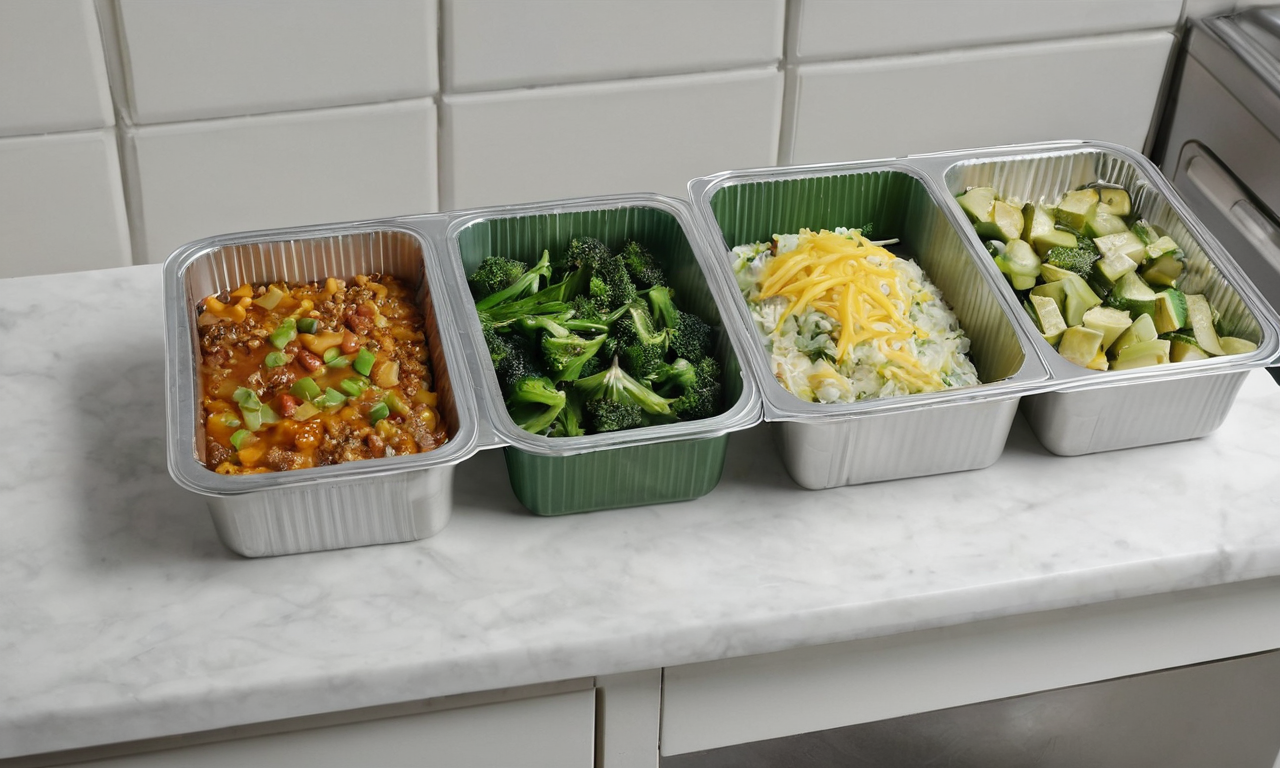
Serving the entire order creates a larger exposed batch. Instead, leave the portion you expect to save closed, or transfer it promptly into clean storage containers. Keep the retained portion away from used forks, shared dipping sauces, and plates that have already been eaten from. FoodSafety.gov’s consumer framework—clean, separate, cook, and chill—still applies even though the restaurant did the cooking (FoodSafety.gov).
Allergen limits remain separate from bacterial food safety. Reheating does not remove an allergen, and transferring food to a new container does not make an uncertain restaurant order safe for someone with a serious allergy. Follow the restaurant’s ingredient and cross-contact information and the person’s medical plan.
3. Portion deep foods for fast cooling
A deep carton of curry, rice, noodles, soup, or casserole cools more slowly than several shallow portions. USDA recommends dividing large amounts into shallow containers; it explicitly says hot food can be placed directly in the refrigerator or chilled rapidly in an ice or cold-water bath (USDA leftovers guidance). Do not wait for a large container to reach room temperature on the counter.
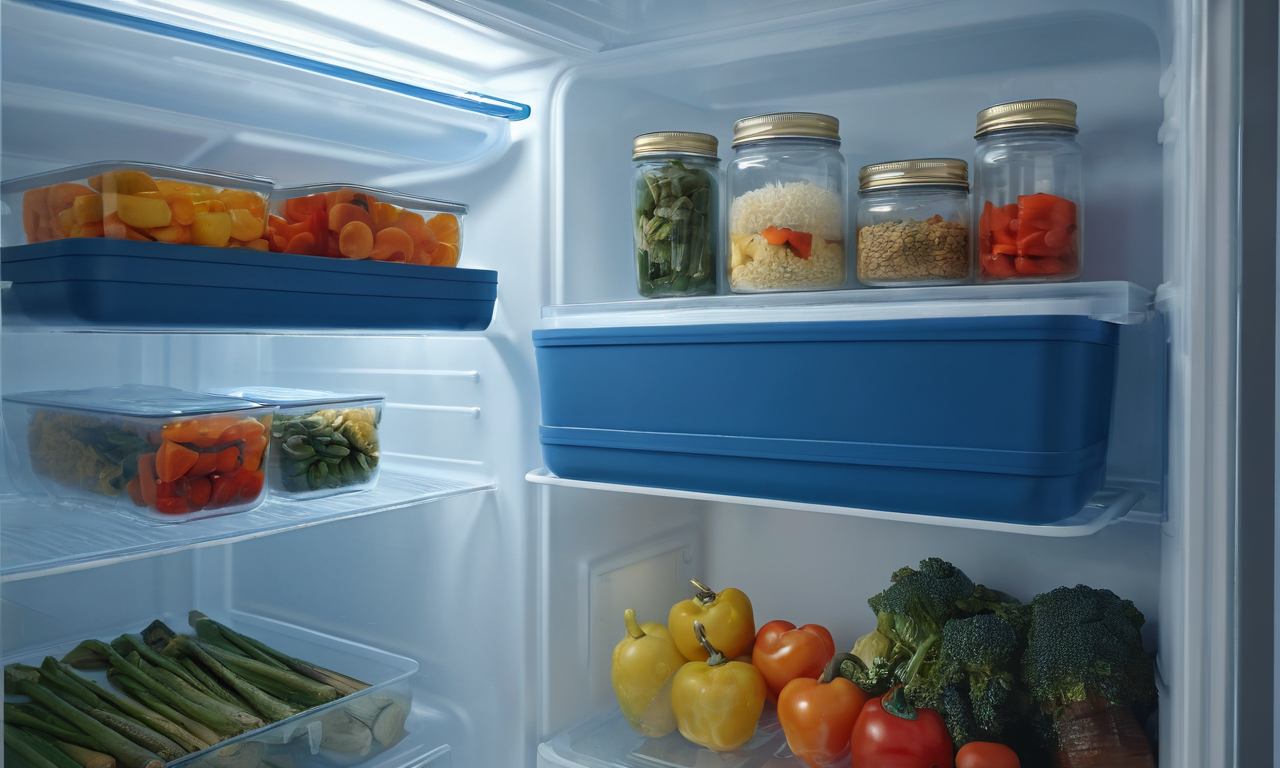
Use clean, food-safe containers. Divide a large entrée into meal-size portions, avoid stacking hot containers tightly, and leave enough refrigerator airflow. For a detailed home-cooling workflow, use the rapid leftover cooling guide.
A decision table for common takeout situations
| Situation | Evidence you have | Best action |
|---|---|---|
| Hot order arrives promptly and steaming | Short known trip; intact packaging | Eat or portion promptly; count table and portioning time |
| Cold order arrives refrigerator-cold | Reliable cold handoff | Refrigerate the saved portion immediately |
| Order sits at the door and no one knows how long | Missing time and temperature history | Do not enter zero in the calculator; discard perishable food conservatively |
| Leftovers ride in an air-conditioned car | Air conditioning is not cold holding | Count the ride unless food is maintained at 40°F or below in a properly packed cooler |
| Food is outdoors above 90°F | Known hot exposure | Use the one-hour limit, not two hours |
| Food reaches the fridge after the limit | Clock already exceeded | Discard; freezing or reheating does not reset history |
| Meal arrives cold but was supposed to be hot | Delivery state does not match expectation | Contact the seller and discard conservatively when safety is uncertain |
The key comparison is not “hot versus cold to the touch.” It is controlled versus uncontrolled. A thermometer can provide a snapshot, but one reading cannot reconstruct an unknown earlier history. The refrigerator thermometer guide explains how to verify that the appliance can actually maintain 40°F or below.
Storage: label the real deadline
Once promptly chilled, most cooked leftovers belong on a short schedule. USDA generally recommends keeping leftovers in the refrigerator for 3 to 4 days or freezing them for longer storage (USDA leftovers guidance). FoodSafety.gov’s cold-storage chart also lists 3 to 4 days for pizza, soups and stews, and cooked meat or poultry leftovers, while freezer times mainly describe quality (cold storage chart).
Label the container with the refrigeration date and a use-or-freeze date. The deadline starts from the original meal, not from each reheating. Freezing on day three pauses refrigerated storage; it does not erase mishandling that happened before freezing. The freezer inventory and rotation plan can prevent a safe portion from becoming an anonymous container.
Reheating: verify heat, but do not rewrite history
For properly handled leftovers, USDA and FDA recommend reheating leftovers and casseroles to 165°F (74°C), measured with a food thermometer (USDA safe temperature chart). Bring sauces, soups, and gravies to a rolling boil. In a microwave, cover the food, rotate or stir when appropriate, allow the directed standing time, and check more than one place because cold spots occur.
Only reheat the portion you plan to eat. Dense rice, noodles, meat, and layered casseroles can heat unevenly, so steam is not enough evidence by itself. The microwave cold-center guide provides a step-by-step verification routine.
Reheating to 165°F is for a properly handled leftover. It does not make a time-abused meal safe. Never combine “it sat out too long” with “I heated it longer” and treat the result as controlled.
Hot-weather and travel adjustments
Cars become hot quickly, and a passenger cabin is not a refrigerator. If takeout must travel after the first stop, pack cold perishable food in a cooler with enough ice or frozen gel packs to maintain 40°F or below. Keep the cooler closed and out of direct sun. For a complete packing workflow, see the picnic cooler and ice-pack plan.
For hot food, an insulated bag can preserve quality but does not prove the food stayed at 140°F or above. Without a dependable heat source and temperature evidence, count travel time. Above 90°F, the official consumer limit contracts from two hours to one (FoodSafety.gov).
What this method cannot tell you
The cumulative clock is deliberately simple. It cannot determine:
- whether the restaurant cooked the food correctly;
- whether food was held safely before pickup;
- whether a courier’s insulated bag maintained a safe temperature;
- whether pathogens or toxins are present;
- whether a meal is safe for a person with a severe allergy;
- whether smell, taste, or appearance proves safety; or
- whether a product-specific instruction permits longer storage.
It also does not replace public-health advice during an outbreak or recall. CDC emphasizes that anyone can get food poisoning and that some groups are more likely to become seriously ill (CDC food-safety basics). Pregnant people, adults 65 and older, children under five, and people with weakened immune systems should use especially conservative choices and seek individualized medical guidance when needed.
When illness needs medical attention
Common food-poisoning symptoms include diarrhea, stomach pain or cramps, nausea, vomiting, and fever. Seek medical care for severe symptoms such as bloody diarrhea, diarrhea lasting more than three days, fever over 102°F, vomiting so frequent that liquids cannot be kept down, or signs of dehydration. During pregnancy, fever and flu-like symptoms warrant prompt medical advice. CDC’s symptom guidance also makes clear that onset can range from hours to days depending on the germ (CDC).
If breathing, consciousness, severe weakness, or neurologic symptoms are affected, seek emergency help. Do not try to identify the germ from timing alone, and retain order details if a clinician or health department asks for them.
The 60-second takeout closeout
Before leaving the table, run this short audit:
- Add the minutes. Include delivery, waiting, eating, travel, and portioning.
- Apply the right limit. Two hours ordinarily; one hour above 90°F.
- Mark unknowns honestly. Unknown is not zero.
- Divide deep portions. Use clean, shallow containers.
- Refrigerate now. Do not wait for food to cool on the counter.
- Date the container. Plan to use or freeze within the appropriate storage window.
- Reheat correctly. Reach 165°F in multiple places, but only for food with a safe prior history.
- Discard when the history fails. A meal costs less than gambling on an unfixable temperature gap.
The useful habit is not watching a perfect timer. It is treating every uncontrolled segment as part of the same history—and refusing to let the refrigerator, freezer, or microwave pretend that history started over.
FAQ
Does the clock start when the courier hands me the bag?
No. Include known delivery time after pickup and any doorstep delay. If earlier holding is unknown or the food arrives at a questionable temperature, the calculation cannot prove safety.
Can I put hot takeout directly in the refrigerator?
Yes. USDA says hot food can go directly into the refrigerator. Divide large or deep portions into shallow containers so they cool quickly and avoid overloading the refrigerator.
Is three to four days guaranteed for every takeout meal?
No. It is general guidance for properly handled leftovers stored at 40°F or below. Follow a shorter product instruction, and discard food with uncertain handling rather than starting a fresh storage window.
Does 165°F make any leftover safe?
No. It is the reheating target for properly handled leftovers. It cannot reliably undo excessive uncontrolled time or heat-resistant toxins.