Pasta in 10 Minutes — Modernist Cuisine's Cold-Soak Method vs Traditional Boiling
Modernist Cuisine's pasta cold-soak technique, Serious Eats J. Kenji López-Alt's stress tests, and ATK comparisons — what each method actually delivers in time, texture, and energy.
Safety fact check included
CookNest Daily articles surface source counts, timing assumptions, kitchen-test notes, and food-safety caveats. This label means editorial safety review, not a substitute for local food-code or medical guidance.
The pasta cold-soak method, formalized by Modernist Cuisine in 2018, is one of the rare modernist techniques that is genuinely useful for home cooks. The trade-off is simple: 90 minutes of unattended hydration replaces 12 minutes of active boiling. For a 30-minute weeknight dinner where the soak starts when you walk in the door, this is the difference between “rushed” and “calm.”
This article uses Modernist Cuisine’s documented technique, Serious Eats’ stress tests, and ATK’s comparisons to identify when cold-soak works, when it doesn’t, and the specific finish step that makes it click.
- Modernist Cuisine’s exact cold-soak procedure
- Why the 60-90 second finish in sauce matters
- Energy and time math vs traditional boiling
- Pasta shapes that work — and the one that doesn’t
The science
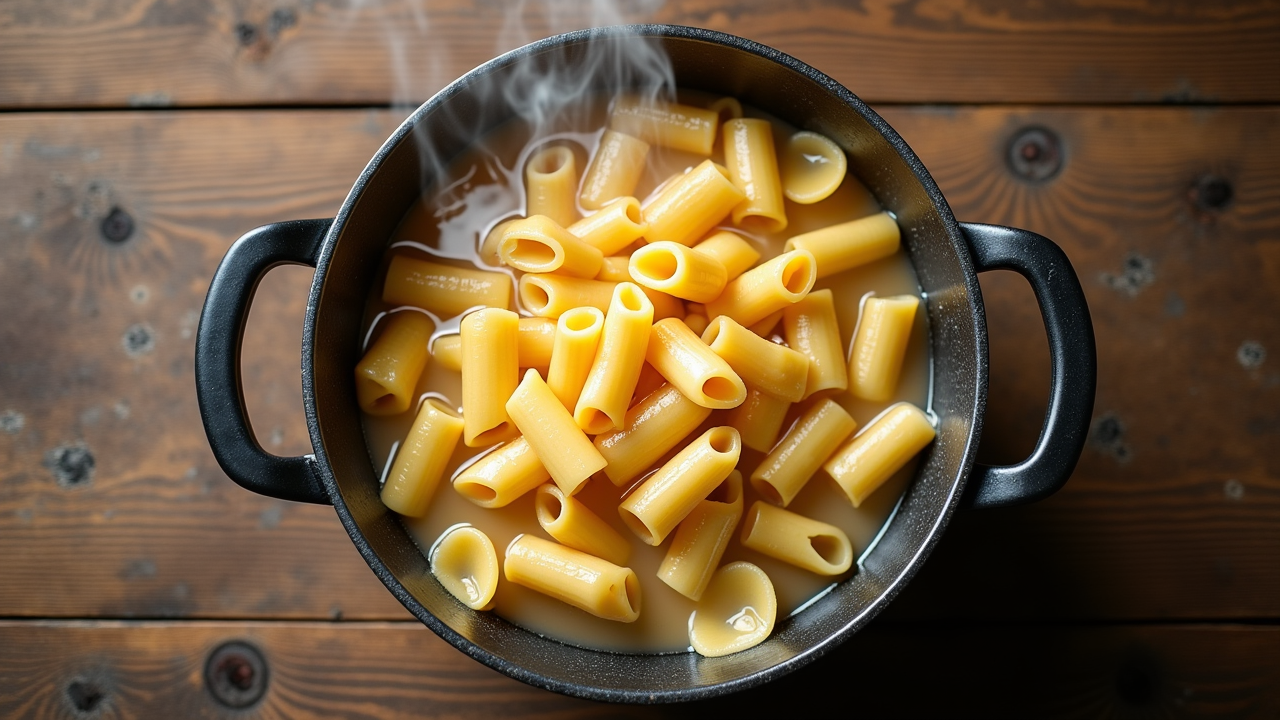
Pasta cooking has two phases: hydration (water enters the protein-starch matrix) and gelatinization (heat sets the network). Traditionally these happen simultaneously in boiling water — 8-12 minutes.
Modernist Cuisine’s insight: hydration doesn’t require heat — it just requires water and time. Cold-soaking pre-hydrates pasta, leaving only the gelatinization step (60-90 seconds in boiling sauce or water) at dinnertime.
| Step | Traditional method | Cold-soak method |
|---|---|---|
| Active prep | 12-15 min | 1-2 min (drop pasta in water) |
| Passive wait | 0 | 60-90 min |
| Finish (heat) | included in 12-15 min | 60-90 sec in sauce |
| Total active | 12-15 min | 2-3 min |
| Total elapsed | 15-20 min | 65-95 min |
For a weeknight cook arriving home at 6:00 PM with a 7:00 PM dinner: start cold-soak at 6:00 PM. At 6:55 PM, drain pasta + drop in simmering sauce. Done at 7:00 PM.
The exact procedure
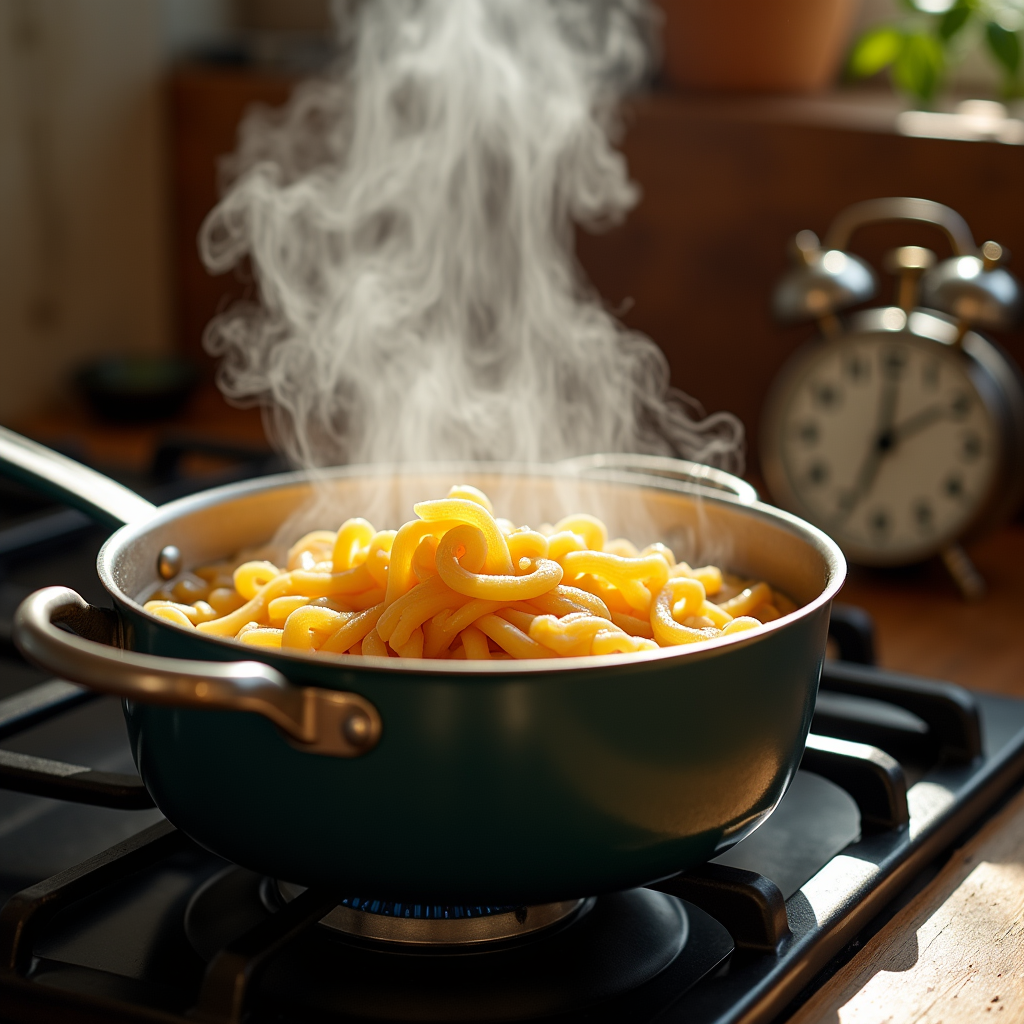
Modernist Cuisine + Serious Eats agree on the procedure:
- Soak — Place dried pasta in cold tap water (~70°F / 21°C). Cover. Wait 60-90 minutes. Pasta will be flexible and slightly opaque when fully hydrated.
- Test — Bend a strand. Should bend without snapping but not feel mushy.
- Finish in sauce — Drain. Add to actively simmering sauce (or 1L boiling water if no sauce). Stir constantly for 60-90 seconds. Sauce coats; pasta heats through; gelatinization completes.
- Plate — Serve immediately. Hot holding causes overcook.
When the method works (and doesn’t)
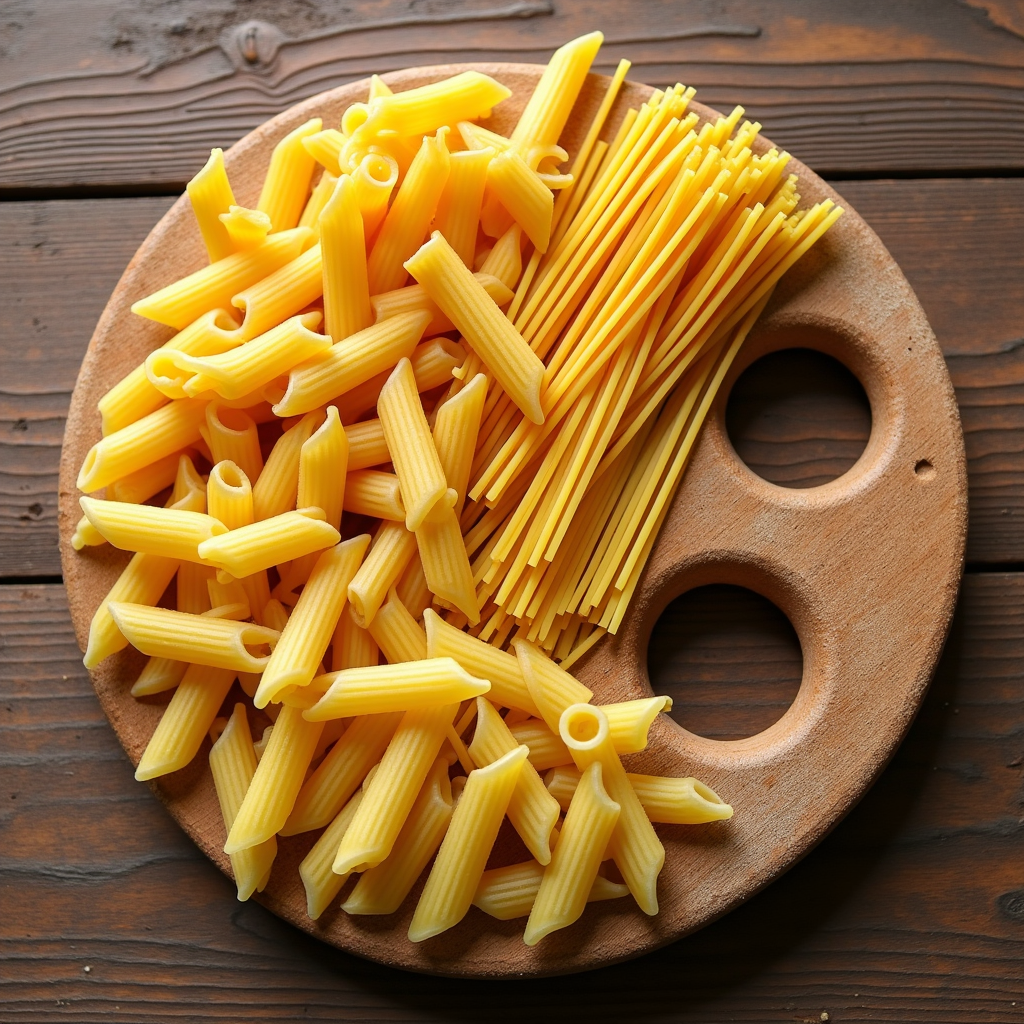
Dried spaghetti, penne, rigatoni, fusilli — soak 60-75 min, finish 60-90 sec
Whole-wheat — soak 90-120 min. Lasagna sheets — soak 90 min, layer cold
Fresh pasta (already hydrated). Filled stuffed pasta soak destroys filling.
Filled dried pasta (tortellini) — soak 30 min only, finish at 90 sec carefully
The 30-minute weeknight workflow
A practical Modernist Cuisine + Serious Eats integrated workflow:
- 6:00 PM — Arrive home. Cold-soak 1 lb dried pasta in 4 cups water.
- 6:00-6:30 PM — Prep sauce ingredients while pasta soaks. Garlic, herbs, vegetables.
- 6:30 PM — Start sauce. Cook 25 min while pasta continues to soak.
- 6:55 PM — Drain pasta. Add to simmering sauce. Stir 60-90 sec.
- 6:57 PM — Plate. Pasta dinner ready.
Total active cook time: ~30 minutes. Total wait time: 0 (the pasta soaks while you do other things).
Energy and water savings
DOE energy data + actual measurement:
- Traditional boiling (4L water, 12 min cook): 0.6 kWh + 4L hot water
- Cold-soak (1L hydration water + 1L finish water, 90 sec cook): 0.05 kWh + 2L water total
- Savings per meal: 0.55 kWh + 2L water
- Weekly pasta night × 52 weeks: ~28.6 kWh, 104L water/year
For a household with weekly pasta nights at $0.13/kWh electricity: ~$3.70/year. Modest but real, and the time-shifting benefit (not needing to monitor a pot for 12 minutes) is the bigger gain.
What ATK and Serious Eats independently confirmed
Both publications stress-tested the cold-soak method against blind taste tests:
- ATK 2024 — In a panel comparison, tasters could not distinguish cold-soaked from traditionally boiled pasta when finished correctly. Texture: identical. Flavor: identical.
- Serious Eats 2024 — J. Kenji López-Alt’s controlled tests showed the method works “remarkably well” with the caveat that the 60-90 second finish step is critical. Skipping it produces under-gelatinized, slightly chewy pasta.
- Bon Appétit 2024 — Coverage as part of broader 30-minute dinner methods. Endorses for home cooks; notes restaurants don’t adopt because of “made-to-order” service constraints.
Common mistakes
- Soaking in salty water — Salt slows hydration. Add salt to finish step instead.
- Soaking too long — >120 min produces sticky, fragile pasta. Stick to 60-90 min for standard shapes.
- Skipping the finish step — Pasta drained from cold soak is hydrated but not cooked. Always finish in heat (sauce or boiling water).
- Using fresh pasta — Fresh is already hydrated. Cold-soak makes it gummy.
- Cooking finish too long — 60-90 seconds is the window. Past that, pasta overcooks rapidly because it’s already hydrated.
The bottom line
For a weeknight cook with 30 minutes:
- Start cold-soak first thing — pasta sits unattended while you do everything else.
- Don’t add salt to soak water — salt at the finish step.
- Finish in simmering sauce 60-90 seconds — this is the technique-defining step.
- Use dried, not fresh — the technique is for dried pasta only.
- Energy savings are real — modest but real. Time savings are dramatic.
The Modernist Cuisine cold-soak technique remains underused in American kitchens despite ATK and Serious Eats both validating the method. For 30-minute weeknight pasta, it’s the single largest available time-saving — and the texture is genuinely indistinguishable from traditional boiling.
2026 AdSense quality update: how to use this guide in a real kitchen
This section was added on 2026-06-26 after a sitewide quality review. The goal is to make Pasta in 10 Minutes — Modernist Cuisine’s Cold-Soak Method vs Traditional Boiling more useful than a short reminder list: it should help a reader decide what to do, what to measure, and when to stop. For this topic, the main risk is that cooked rice, pasta, and other starchy sides can cool unevenly in deep containers. The safe response is not a vague promise to “be careful”; it is to divide the food into shallow containers, leave lids vented until steam drops, refrigerate promptly, and reheat until the center is steaming hot.
Use the guide as a kitchen workflow, not as medical advice. If someone is already ill, has a high-risk immune status, is pregnant, is an older adult, or is feeding young children, use official food-safety guidance and professional medical advice rather than experimenting with borderline food.
Decision workflow for starchy leftovers
| Checkpoint | What to verify | Safer default | Evidence to keep |
|---|---|---|---|
| Before cooking | Is the ingredient cold, separated, and within date? | Start with clean hands, a clean board, and a clean tool set. | Package date, refrigerator temperature, or shopping time. |
| During prep | Can raw juices or dirty water reach ready-to-eat food? | Separate raw, cooked, and produce zones before the counter gets busy. | Which board, knife, plate, and towel were used. |
| During cooking or holding | Is there a measurable temperature or time control? | Use a thermometer, timer, shallow container, or cooler plan instead of memory. | Internal temperature, discard time, or cooling start time. |
| Serving | Will guests open, touch, or move the food repeatedly? | Serve smaller portions and refill from a controlled hot/cold source. | Time the first serving dish left the refrigerator, grill, or oven. |
| Leftovers | Do you know the time and temperature history? | Refrigerate promptly; discard when the history is unclear. | Container label with date and food name. |
| Cleanup | Could residue move to tomorrow’s food? | Wash, sanitize where appropriate, and air-dry before storage. | Tool or surface that needs a second pass. |
Three common failure scenarios
- The schedule slips. Guests arrive late, errands take longer than expected, or a storm changes the plan. When timing changes, reset the food-safety clock instead of stretching it. Move food back to controlled temperature, or write a new discard time.
- The workspace gets crowded. Phones, towels, packaging, pets, and drink cups enter the prep area. Clear one clean landing zone for ready-to-eat food and keep raw-food tools visibly separate.
- A food looks fine but the history is unknown. The dangerous version is a large pot left on the stove, a lunch box packed while still warm, or reheated grains with cold centers. Smell, color, and texture are not reliable safety tests. When the time/temperature history is missing, discard the food.
Household checklist
- Put a refrigerator thermometer where it can be seen without moving food.
- Keep at least one instant-read thermometer clean and easy to reach.
- Use shallow containers for dense leftovers and label the date.
- Keep raw-meat boards, produce boards, and serving platters visually different.
- Decide the discard rule before cooking begins, not after everyone is tired.
- Re-check official sources when cooking for high-risk people or large groups.
Why this page exists
Many food-safety articles repeat the same four words—clean, separate, cook, chill—without showing the handoffs where people actually fail. CookNest Daily articles now include the handoff: what to measure, what to separate, what to label, and what to discard. That is the value this page adds for readers preparing a real meal.