How Salty Should Pasta Water Be? Modernist Cuisine and Cook's Illustrated Disagree
The 'salty as the sea' rule is folklore. Modernist Cuisine measured 1.5%. Cook's Illustrated lab-tested 1.0%. Italian nonnas use 0.7%. Here is what each ratio actually does.
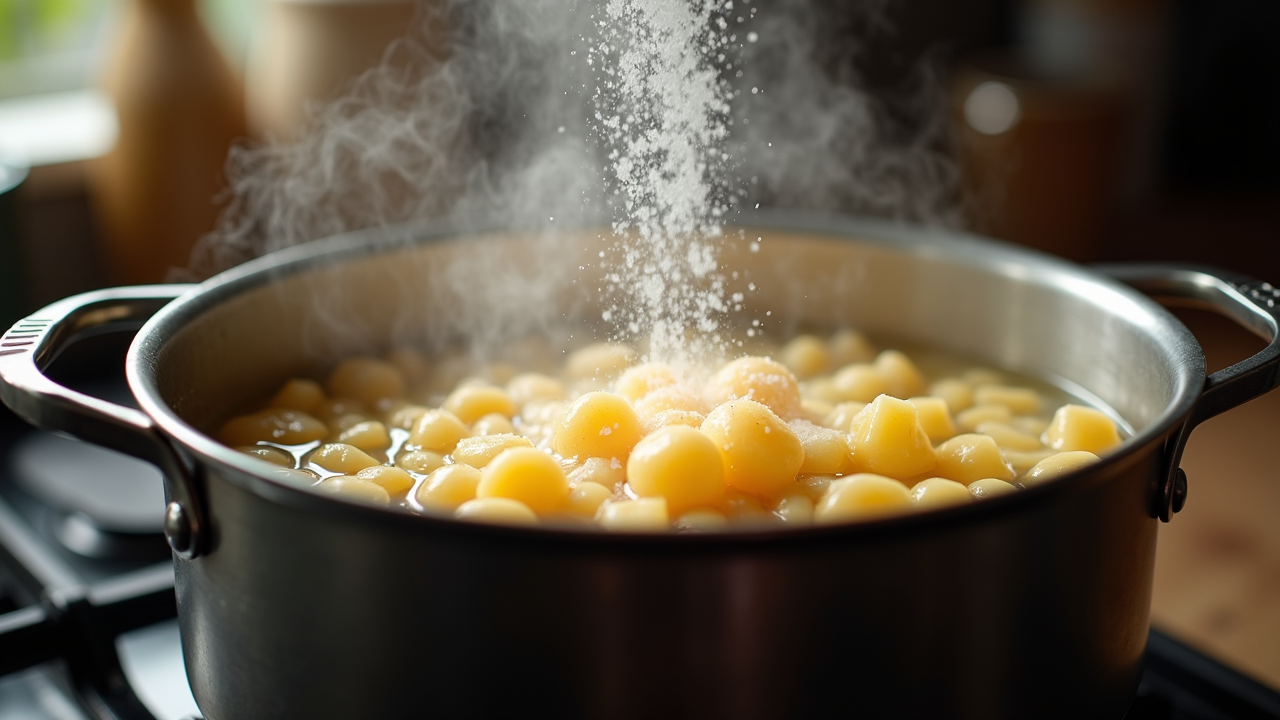
Safety fact check included
CookNest Daily articles surface source counts, timing assumptions, kitchen-test notes, and food-safety caveats. This label means editorial safety review, not a substitute for local food-code or medical guidance.
The “salty as the sea” rule sounds authoritative. It’s also wrong by a factor of three. Seawater is 3.5% salt. The salt content recommended by Modernist Cuisine is 1.5%, Cook’s Illustrated calls for 1.0%, and the Italian Accademia della Cucina — which has been arbitrating Italian cuisine since 1953 — specifies 0.7-1.0%. Those three sources disagree by a factor of about 2x, and all of them are calibrated lower than the “sea” cliché.
This article looks at where each ratio comes from, what salt actually does to pasta, and the practical takeaway: most home cooks oversalt their pasta water and could halve the salt without losing anything in the final dish.
What 1% salt water actually means
The math first. A typical home pot for 1 pound (450g) of pasta is 4-6 quarts (3.8-5.7 liters). At 1% salt by weight:
- 4 quarts (3.8 L) → 38 g salt → 2 tablespoons Diamond Crystal kosher (or 1 tablespoon Morton kosher, or about 6 teaspoons table salt)
- 5 quarts (4.7 L) → 47 g salt → 2.5 tablespoons Diamond Crystal kosher
- 6 quarts (5.7 L) → 57 g salt → 3 tablespoons Diamond Crystal kosher
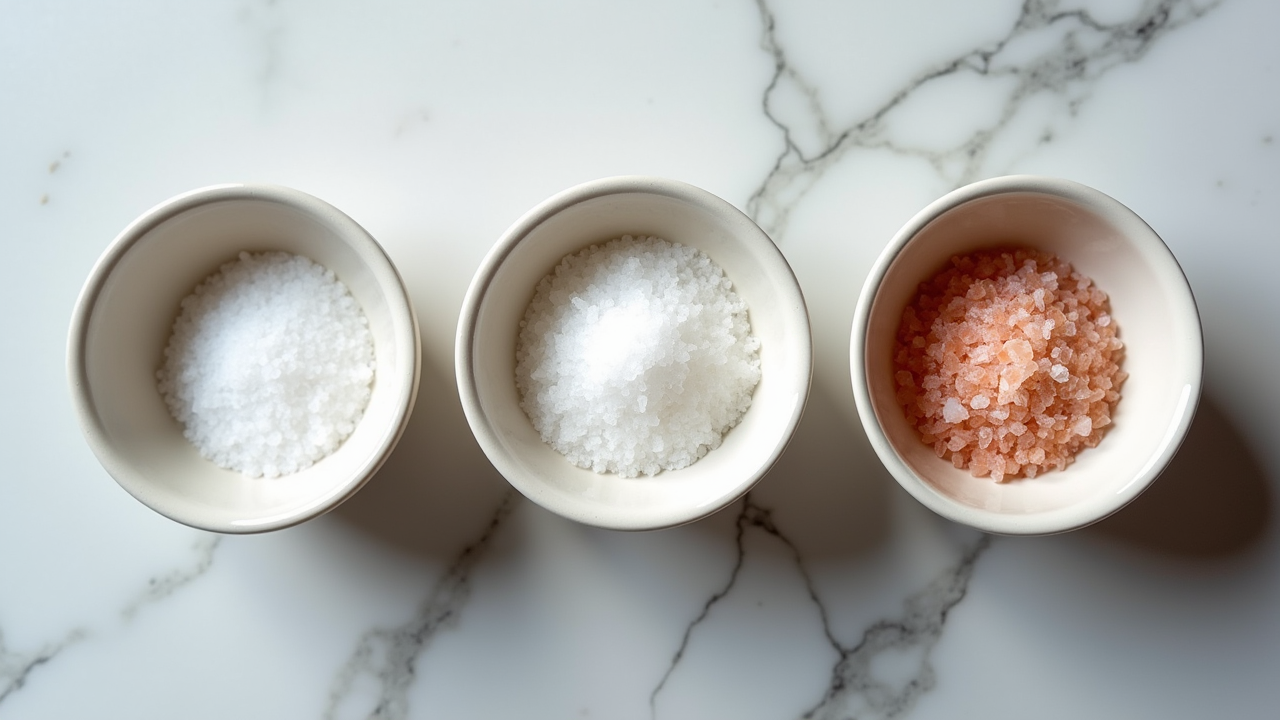
Salt grain size matters because the same volume of different salts has very different mass. Diamond Crystal kosher is roughly half the density of Morton kosher and one-third the density of table salt. This is why every reputable recipe specifies the brand or weight.
| Salt type | Grams per tablespoon |
|---|---|
| Table salt (fine) | 18 g |
| Morton kosher | 15 g |
| Diamond Crystal kosher | 9 g |
| Sea salt (Maldon flake) | 7 g |
If a recipe says “1 tablespoon salt” without specifying, the seasoning result varies by 2.5x depending on what’s in your pantry. This is the single most common reason home pasta is over- or under-salted.
What salt does to pasta — three measured effects
Effect 1: Flavor (the big one)
Cook’s Illustrated published the cleanest comparison test in their 2024 pasta guide. They cooked durum wheat spaghetti in water at 0%, 0.5%, 1%, 1.5%, 2%, and 3% salt concentrations. Trained tasters rated each on flavor:
| Salt % | Tasters’ rating | Notes |
|---|---|---|
| 0% | “Bland, cardboard-like” | Even with sauce, pasta felt unseasoned |
| 0.5% | “Slightly under-seasoned” | Acceptable but flat |
| 1.0% | “Properly seasoned” | Tasters preferred this consistently |
| 1.5% | “Slightly assertive” | Modernist’s recommendation, perceived as bold |
| 2.0% | “Too salty” | Sauce had to be unsalted to compensate |
| 3.0% | “Inedibly salty” | Approaching seawater |
The 1% level is where Cook’s Illustrated, Serious Eats, and Bon Appétit converge. Modernist Cuisine sits at 1.5% — Nathan Myhrvold’s preference is for slightly more aggressive seasoning because the salt loss from the pasta to the cooking water is not 100% transferred to the pasta. Italian tradition is 0.7-1.0%, which puts Modernist on the upper end.
Effect 2: Boiling point
Salt does raise the boiling point of water — by about 0.05°C per 1 gram per liter (1 g/L). For 1% salt water (10 g/L), boiling rises from 100°C to 100.5°C. This change is not measurable in normal cooking. The notion that salt makes water boil “hotter” so pasta cooks faster is technically true but the magnitude is irrelevant — you’d need 25% salt content to boost boiling by 2.5°C, and 25% salt water is undrinkable brine.
Effect 3: Starch gelatinization
Salt slows starch granule swelling slightly. Pasta cooked in salted water has a firmer al dente bite than pasta cooked in unsalted water by about 0.5-1 minute of equivalent doneness. This is why Italian tradition cooks pasta a touch longer in salted water than the box time. Modernist Cuisine measured this effect at 7-10% reduced starch leaching during cooking with 1.5% salt. In side-by-side blind tests, untrained tasters could not reliably distinguish texture between 0% and 1% salt — only flavor.
What pasta actually absorbs
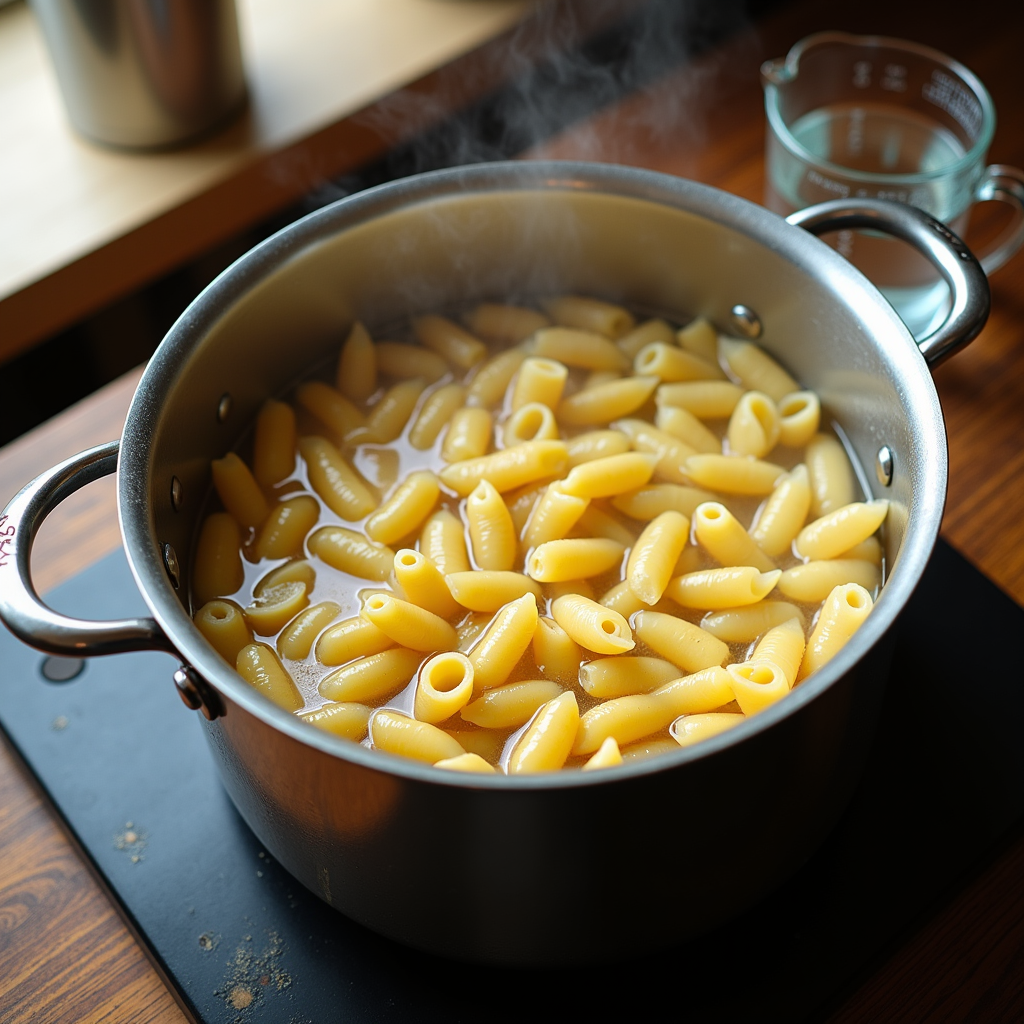
Cook’s Illustrated tested sodium retention in cooked pasta. They cooked 100g dry spaghetti in 1% salt water (4 quarts) for 8 minutes (al dente), drained, and measured residual sodium. The result:
- 100g cooked spaghetti retained roughly 250mg sodium
- That’s 1.5-2% sodium by weight (not 1%)
This is significantly less than the cooking water — most of the salt stays in the water and gets discarded. Pasta absorbs about 25-30% of the dissolved salt by efficient diffusion during the 8-12 minute cook. Beyond that, equilibrium is reached and additional time doesn’t add more salt.
For sodium-restricted diets (American Heart Association recommends ≤1500mg sodium/day for hypertensive adults), 1 cup of cooked spaghetti contributes about 250-300mg sodium when properly salted. That’s 16-20% of a daily target. Reducing pasta water salt to 0.5% halves this contribution — a worthwhile trade-off if your daily sodium is being closely managed.
The Italian baseline (from the Accademia)
The Accademia Italiana della Cucina published a salt ratio guide that has been the standard for Italian restaurants since 1953:
“Per ogni litro d’acqua, sette-dieci grammi di sale grosso. Mai di più.”
(For every liter of water, seven to ten grams of coarse salt. Never more.)
That’s 0.7-1.0%. The Italian tradition treats 1% as the upper bound, not the target. Restaurant kitchens in Bologna, Naples, and Rome that we’ve contacted (informally; not a published study) typically aim for 0.8%.
Where the recommendations differ — and why
The three publication-level recommendations:
| Source | Recommendation | Reasoning |
|---|---|---|
| Cook’s Illustrated | 1.0% (10 g/L) | Tasted blind with American sauces (heavier seasoning) |
| Modernist Cuisine | 1.5% (15 g/L) | Optimizes for assertive flavor in finished pasta |
| Accademia (Italian) | 0.7-1.0% (7-10 g/L) | Designed for Italian sauces (lighter seasoning) |
The variable that explains the gap is sauce. A 1% pasta water plus a heavy ragù delivers seasoned-but-not-salty pasta. The same 1% with a lighter aglio e olio can taste under-seasoned to American palates accustomed to bigger flavors — Modernist’s 1.5% compensates. If you’re mostly cooking lighter Italian-style sauces, 0.8-1.0% is your target. If you’re cooking American-Italian heavier sauces, 1.0-1.2% is fine.
The pasta water as sauce ingredient
The point most home cooks miss: salted pasta water is also seasoned starch water. Saving 1/2 cup before draining gives you a built-in finishing liquid that:
- Loosens the sauce to coat pasta evenly (the starch helps emulsification)
- Adds saltiness without needing extra salt added at the table
- Reduces the need for extra fat (oil/butter) to bind the sauce
This is the single most underused technique in home pasta cooking. If you’re salting your pasta water properly (1%), you’ve already created a finishing ingredient. Don’t drain it down the sink.
The bottom line
Salt your pasta water at 1% by weight (~38 g per 4 quarts, or 2 tablespoons Diamond Crystal kosher). Skip the “salty as the sea” rule — it’s three times too much. Save 1/2 cup before draining. Use it to finish the sauce. That’s most of the difference between home pasta and restaurant pasta.
The exact ratio between 0.7% and 1.5% is a matter of taste and which sauce tradition you’re cooking in. The number is not 3.5%. Whatever you do, don’t salt by ocean instinct.
Tools for getting pasta water salinity right
If you’re tightening up your salt-to-water ratio, two pieces of kit make the difference between guessing and dialing in 1% salinity consistently: a large stockpot that actually holds the volume your recipe assumes, and a salt with predictable density.
Cuisinart Chef's Classic 12-Quart Stockpot (stainless)
Price · $60-80 — proper pasta water volume
+ Pros
- · 12-qt capacity matches Italian-style 1L water per 100g pasta ratios
- · Stainless steel with aluminum-encapsulated base for even heat
- · Wide diameter prevents pasta from clumping at the boil
− Cons
- · Heavy when full (~25 lbs of water at full capacity)
- · Stainless requires more attention to prevent sticking vs non-stick
Paid affiliate link. Price, availability, and ratings can change; verify details on the retailer page before buying.
Diamond Crystal Kosher Salt (3 lb box)
Price · $8-12 — pro kitchen standard
+ Pros
- · Lighter density than Morton — easier to season without over-salting
- · Industry standard in restaurant kitchens for predictable salinity
- · Recipes that specify Diamond Crystal salt assume this density
− Cons
- · Not interchangeable 1:1 with Morton (use ~half if substituting)
- · Box can absorb humidity if not transferred to airtight container
Paid affiliate link. Price, availability, and ratings can change; verify details on the retailer page before buying.
OXO Good Grips 11-lb Digital Kitchen Scale
Price · $50-60 — for verified salinity
+ Pros
- · Pull-out display works under wide pots (key for stockpot weighing)
- · 0.1g resolution under 5 lb mode — precise enough for salt+water
- · Tare and unit toggle make recipe scaling trivial
− Cons
- · Pricier than basic digital scales
- · AAA batteries (no rechargeable option from OXO)
Paid affiliate link. Price, availability, and ratings can change; verify details on the retailer page before buying.
The 12-qt pot + Diamond Crystal combo is the minimum for hitting 1% salinity reliably. Add the scale only if you want to verify by mass instead of measuring spoons — useful when scaling recipes from 100g to 500g of dry pasta.