Vacuum-Sealed Fish Thawing Safety: When to Open the Package and Why
A conservative guide to thawing frozen vacuum-packed fish, following package directions, controlling time and temperature, and recognizing botulism warning signs.
Safety fact check included
CookNest Daily articles surface source counts, timing assumptions, kitchen-test notes, and food-safety caveats. This label means editorial safety review, not a substitute for local food-code or medical guidance.
Vacuum packaging changes more than freezer organization. By removing much of the oxygen around fish, it can slow oxidation and freezer damage, but it also creates a reduced-oxygen environment. If a product that requires frozen storage is thawed incorrectly and held at unsafe temperatures, that environment can support hazards that ordinary smell and appearance checks cannot rule out.
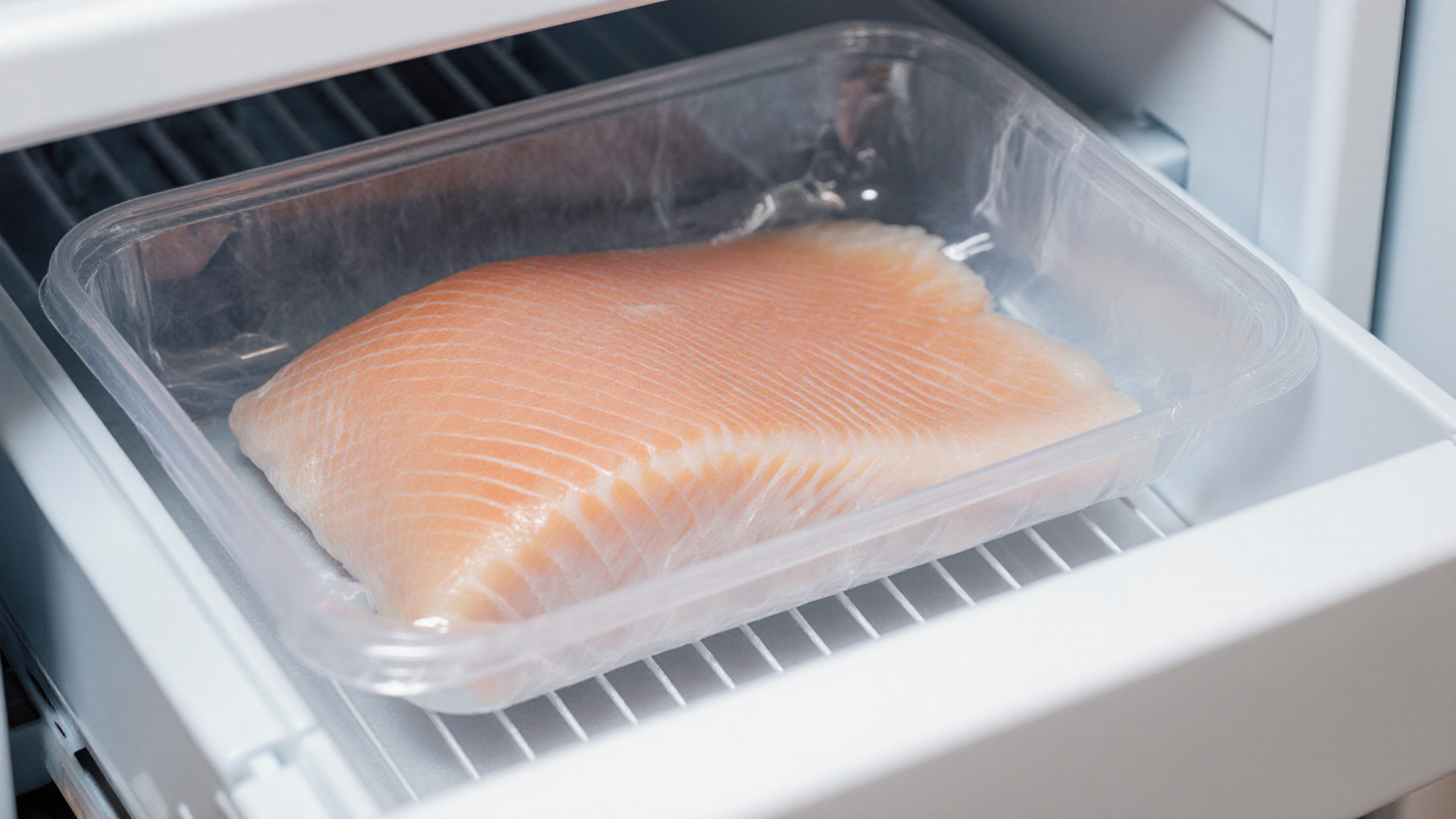
The safest first step is simple: read the original package while the fish is still frozen. Follow its storage and thawing directions exactly. Many commercially vacuum-packed fish products tell consumers to remove the fish from the package before thawing. Others have validated processing and specific instructions. Do not replace the manufacturer’s direction with a universal social-media rule.
Why the package matters
Clostridium botulinum bacteria can form spores, and some types can grow and produce toxin under low-oxygen conditions when time, temperature, salt, acidity, and other controls permit. The CDC describes botulism as rare but serious because the toxin attacks nerves and can cause paralysis and breathing difficulty (CDC). The World Health Organization likewise emphasizes that foodborne botulism is a medical emergency (WHO).
This does not mean every vacuum-packed fillet contains toxin. It means the package, product formulation, frozen-storage requirement, and thawing method are safety controls—not cosmetic details. Research on non-proteolytic C. botulinum shows that growth boundaries depend on interacting conditions rather than one simple timer (International Journal of Food Microbiology). Home cooks cannot validate those boundaries by looking at a fillet.
The label-first decision tree
| What the package says | What to do | What not to improvise |
|---|---|---|
| “Keep frozen” and “remove from package before thawing” | Open or remove the fish while frozen, place it in a clean covered dish, then thaw in the refrigerator | Leaving the sealed pouch in the refrigerator overnight |
| Gives a specific in-package thaw method | Follow the named time, temperature, and opening step exactly | Extending the time because the center still feels firm |
| Package is torn, swollen, leaking, unlabeled, or directions are missing | Do not guess; contact the producer or discard conservatively | Tasting, rinsing, or repackaging as a safety test |
| Fish arrived partly thawed and the history is unknown | Use delivery temperature and time evidence; when uncertain, discard | Refreezing to “reset” uncertain handling |
Michigan State University Extension explains why consumers should open many vacuum-packed fish products before thawing and ties the instruction to reduced-oxygen botulism risk (MSU Extension). Treat that as a practical explanation, while the exact package instruction remains the controlling product-specific direction.
Refrigerator thawing: the default planning method
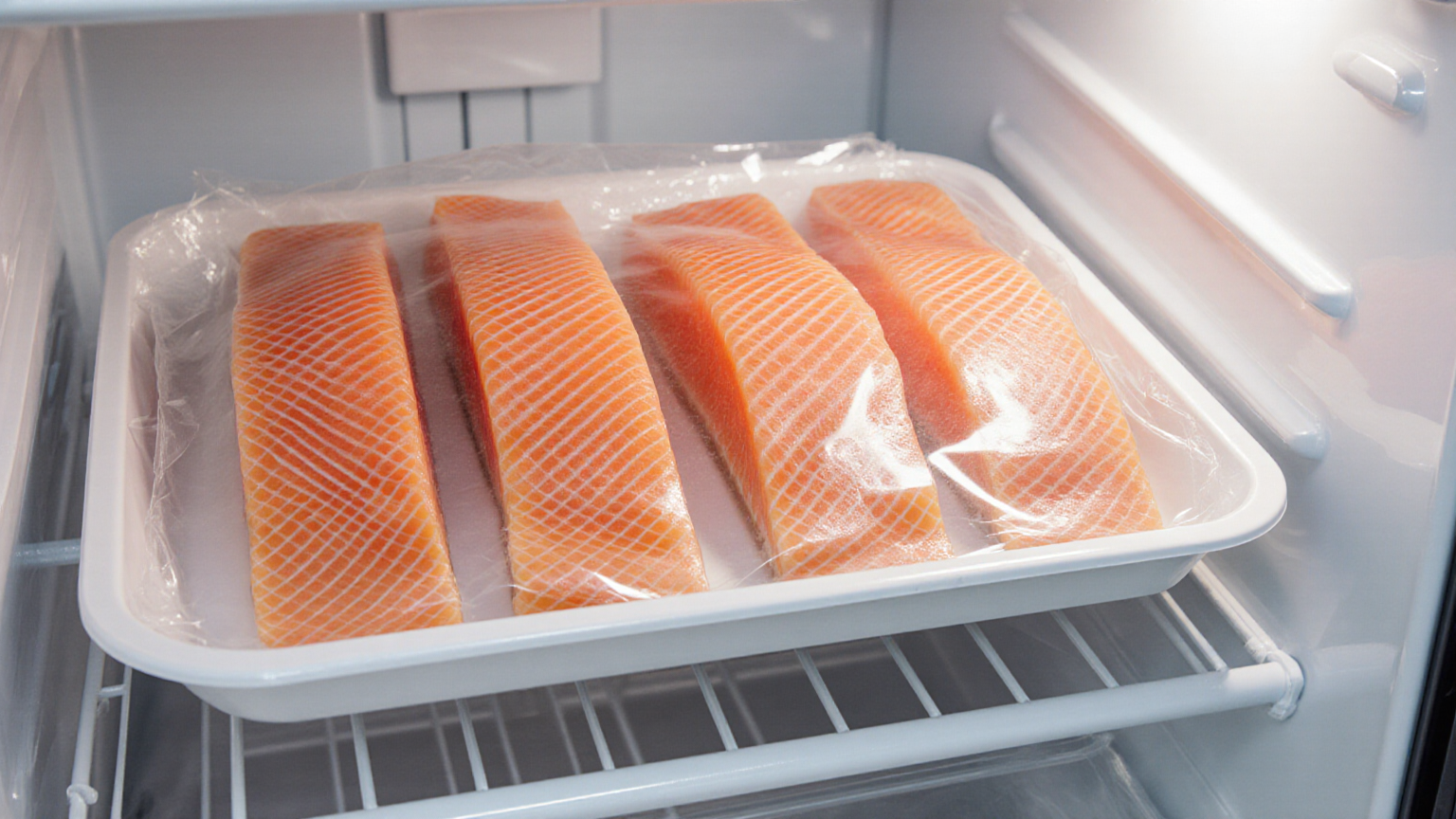
USDA identifies refrigerator thawing as one of the safe thawing methods and notes that freezing does not destroy all microorganisms (USDA FSIS). For a product that says to remove it from reduced-oxygen packaging first:
- Wash hands and clear a low refrigerator shelf.
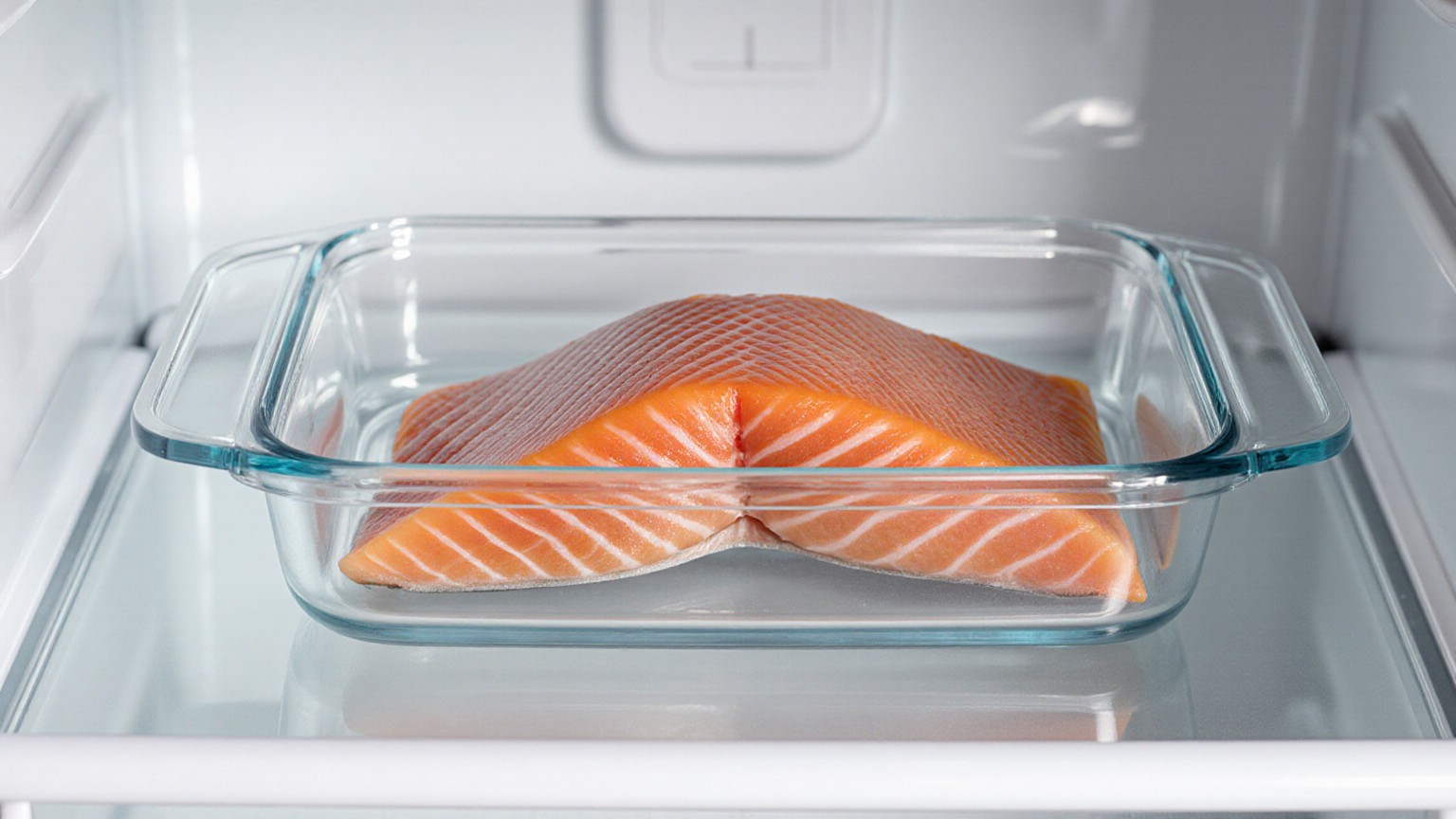
- While the fish is still frozen, cut or remove the original pouch without contaminating the fish.
- Place the fish in a clean, covered, leak-resistant dish.
- Keep it separated from ready-to-eat foods.
- Cook within the product’s stated refrigerated time; if no reliable direction is available, use a conservative plan rather than extending storage.
Do not thaw on the counter. Room temperature warms the surface long before the center is ready. Do not rely on a refrigerator door shelf, where temperatures change more often. A refrigerator thermometer is more useful than assuming the appliance dial equals the food temperature.
Cold-water thawing needs a tighter workflow
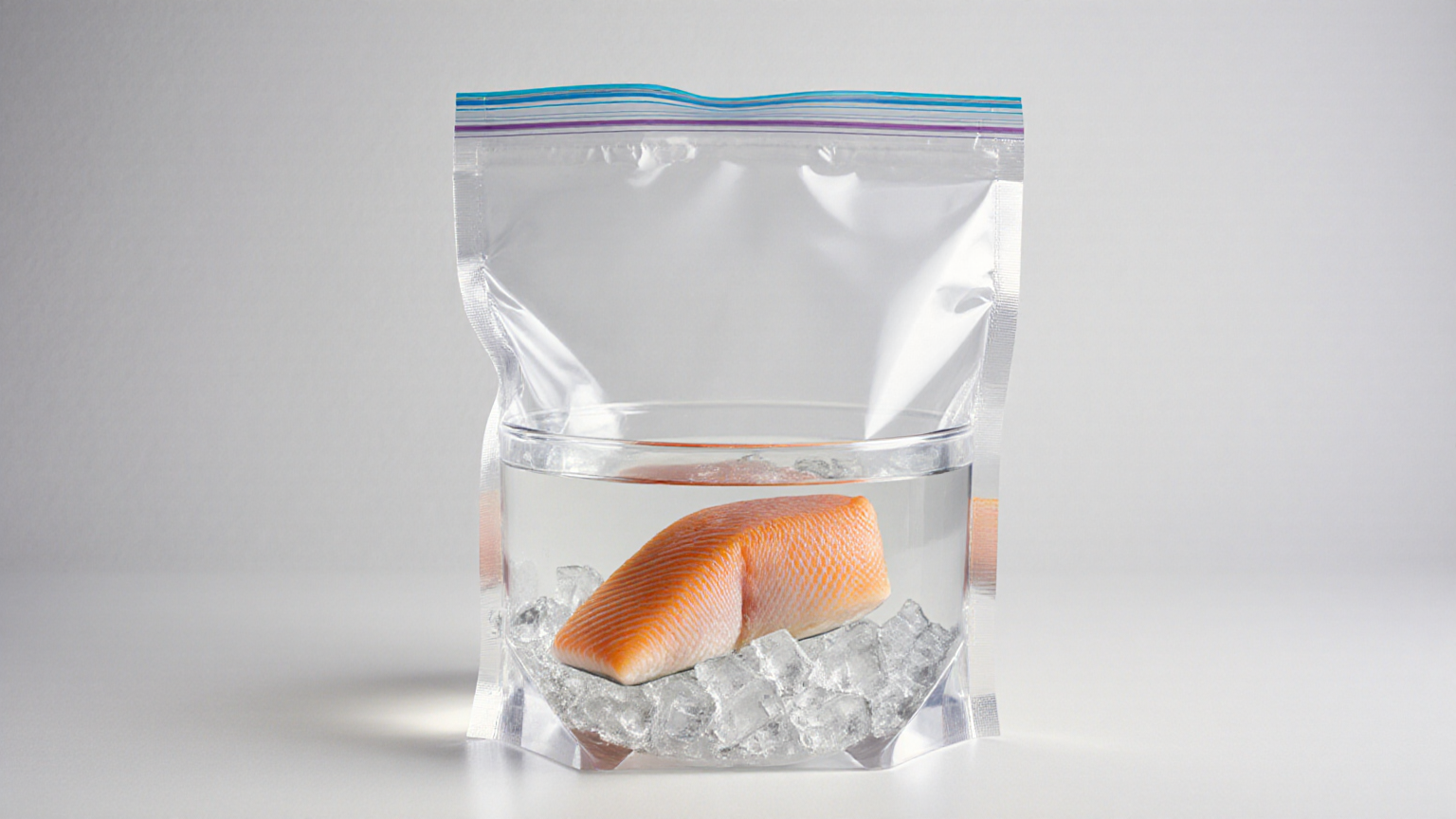
USDA’s cold-water method uses a leakproof package, cold water, water changes, and immediate cooking. Vacuum-packed fish adds a label question: if the original reduced-oxygen pouch says to remove fish before thawing, do not use that pouch as the cold-water bag. Remove it while frozen, then put the fish in a new, clean, leakproof outer bag if the product directions allow cold-water thawing.
Keep the water cold, replace it at the recommended interval, and cook immediately after thawing. Never use warm water to speed the process. Warm water can push the surface through unsafe temperatures while the center remains frozen. If the replacement bag leaks, treat the sink and nearby surfaces as raw-seafood contact areas and clean them according to the four-step food-safety framework.
A useful planning estimate is not a universal thaw time. It is a deadline: if dinner starts at 6 p.m., refrigerator thawing should begin early enough that no counter shortcut is needed. Thickness, mass, shape, refrigerator temperature, and ice glaze all change timing.
Microwave thawing means immediate cooking
Microwave thawing can create warm edges and cold centers. Use it only when the product directions permit it and cooking will start immediately. Remove prohibited packaging first. Transfer the fish to microwave-safe cookware, rotate or separate pieces as the appliance manual directs, and move straight into the cooking step.
This is not a “thaw now, refrigerate for later” method. Partial cooking and uneven heating make delayed handling harder to evaluate. Use the cooking directions for the exact fish and verify doneness with an appropriate food thermometer; color alone is not a universal safety guarantee.
Never use sensory checks as a botulism test
Botulinum toxin cannot be reliably detected by smell, appearance, or taste. Do not taste suspicious fish “just to see.” A normal-looking flat pouch does not prove that temperature control was maintained. A swollen or leaking pouch is a clear discard signal, but the absence of swelling is not a safety certificate.
Published outbreak evidence involving vacuum-packaged salted fish illustrates why reduced oxygen, formulation, and storage controls deserve respect, even though an outbreak product is not the same as every retail frozen fillet (Journal of Food Protection). Use outbreak data to support conservative handling—not to imply that ordinary correctly stored fish is inherently dangerous.
Separate thawing safety from cooking quality
Opening a package before thawing does not make fish “dry out” enough to justify ignoring the instruction. Cover the clean dish, keep refrigerator exposure brief, and plan cooking. Conversely, vacuum packaging does not make a product safe to sous vide, thaw on the counter, or hold at a low temperature unless the product and process were specifically designed and validated for that use.
Food Code time-temperature rules are written primarily for retail and food-service settings, not as a substitute for a home package label, but they show why controlled cooling, thawing, and holding are formal safety processes (FDA Food Code). Home cooks should use the simpler conservative boundaries in USDA, FDA consumer, and package guidance.
Delivery and power-outage scenarios
For delivered frozen fish, inspect it promptly. It should arrive frozen or with reliable evidence that it remained safely cold. Photographing a box is not temperature evidence by itself. If the fish is soft, warm, leaking, or has an unknown transit history, contact the seller and follow official discard guidance rather than trying to rescue it with the freezer.
During a power outage, keep refrigerator and freezer doors closed. Evaluate time and temperature with official outage guidance; do not treat a refrozen exterior as proof that the product never warmed. Freezing pauses growth but does not erase earlier temperature abuse.
A no-guesswork prep card
Before buying or freezing vacuum-packed fish, confirm these items:
- the label is intact and readable;
- frozen-storage and thawing directions are present;
- the home freezer can keep it frozen;
- refrigerator space is available for a covered thawing dish;
- the cooking day is chosen before thawing starts;
- a new leakproof bag is available if an allowed cold-water method requires it;
- raw-seafood tools and surfaces can be separated and cleaned;
- leftovers will follow a separate rapid-cooling plan, such as the safe meal-prep cooling guide.
The vacuum-sealing versus freezer-storage guide can help with quality, but freezer burn is not the same as pathogen or toxin safety. A dry spot may affect eating quality; an unsafe time-temperature history may not be visible.
Symptoms: do not wait for an ordinary stomach-upset pattern
CDC lists blurred or double vision, drooping eyelids, slurred speech, difficulty swallowing, muscle weakness, and difficulty breathing among botulism symptoms. Botulism can occur without the classic vomiting-and-diarrhea pattern people associate with food poisoning. If botulism is possible, seek emergency medical care immediately; do not wait for a routine appointment or attempt home treatment (CDC). For other severe food-poisoning symptoms, CDC also provides guidance on when to seek care (CDC food-safety symptoms).
FAQ
Should I puncture the pouch and leave the fish inside it?
Follow the package. When the direction says remove from packaging, fully transfer the frozen fish to a clean covered dish. A small puncture may not match the validated instruction and can leak.
Can I refreeze fish after refrigerator thawing?
USDA provides general refreezing guidance, but quality may decline and product-specific directions still matter. Refreezing cannot correct an unknown or unsafe thawing history.
Is vacuum sealing at home the same as commercial reduced-oxygen packaging?
No. Formulation, sanitation, equipment, oxygen removal, freezing rate, labels, and validated controls differ. Home vacuum sealing should not be used to invent extended refrigerated shelf life for fish.
What is the one rule to remember?
Read and follow the package before thawing. When the instruction requires removal from the vacuum pouch, open it while frozen, thaw under controlled cold conditions, and cook on schedule.